
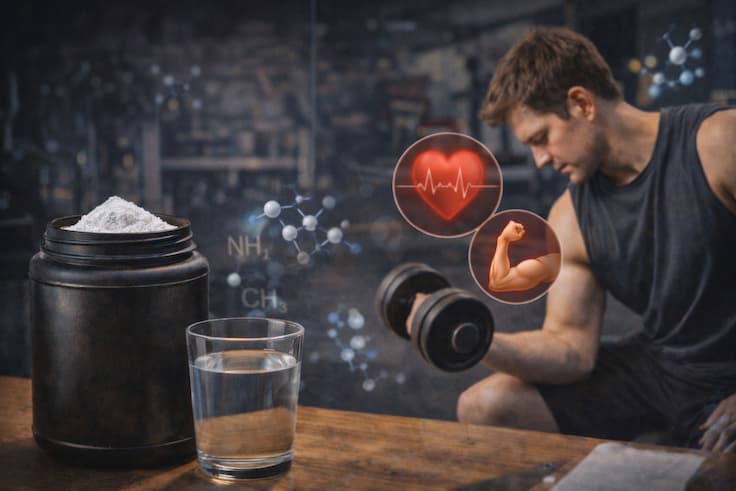
Creatine has been around longer than most fitness influencers, yet it still gets treated like a suspicious white powder that will either turn you into a superhero or destroy your kidneys. Neither is true.
Creatine is not new, not experimental, and not a shortcut. It is one of the most studied supplements in nutrition and sports science. And despite the noise around it, the research has been remarkably consistent.
Let us separate facts from fear.
What Is Creatine
Creatine is a naturally occurring compound made from three amino acids: arginine, glycine, and methionine. Your body already produces it in small amounts, mainly in the liver and kidneys. You also get it from food, especially red meat and fish.
About ninety-five percent of the creatine in your body is stored in muscles, where it helps produce ATP, the primary energy currency used during short, intense efforts like lifting weights or sprinting.
In simple terms, creatine helps your muscles recycle energy faster.
How Creatine Is Made
Supplemental creatine, usually in the form of creatine monohydrate, is synthesized in controlled industrial processes that mirror the structure of naturally occurring creatine. It is not a steroid, not a hormone, and not a synthetic stimulant.
Creatine monohydrate is the most researched form and remains the gold standard. Newer versions often cost more but have not shown superior benefits in well-controlled studies.
What Research Says About Creatine
Creatine is one of the rare supplements where decades of research agree on key points.
Large reviews and position statements from the International Society of Sports Nutrition show that creatine supplementation:
- Improves strength and power output
- Supports increases in lean muscle mass when combined with training
- Enhances performance in repeated high-intensity exercise
- Is safe for healthy individuals when used appropriately
Emerging research also suggests potential benefits beyond muscle, including cognitive support during sleep deprivation, aging-related muscle loss, and neurological health. These areas are still being studied, but the early data is promising.
Is Creatine Safe
This is where most myths live.
Extensive long-term studies show that creatine does not damage kidneys, liver, or heart in healthy individuals. Even multi-year studies using standard doses have not shown harmful effects on organ function.
The confusion often comes from the fact that creatine increases creatinine levels in blood tests. Creatinine is a breakdown product of creatine, and higher levels do not automatically mean kidney damage. This is a known testing limitation, not organ failure.
However, people with pre-existing kidney disease should consult a healthcare professional before using creatine. This is caution, not panic.
Common Myths vs Facts
Myth: Creatine is a steroid
Fact: Creatine is not a steroid and does not affect hormone levels.
Myth: Creatine causes kidney damage
Fact: Research consistently shows no kidney harm in healthy individuals using recommended doses.
Myth: Creatine causes dehydration or cramps
Fact: Studies show no increased risk of dehydration. Creatine actually increases intracellular water in muscles.
Myth: Creatine is only for bodybuilders
Fact: Creatine supports strength, power, and recovery, which are relevant to many populations, including older adults.
How to Consume Creatine
Creatine works through saturation, not timing tricks.
Standard Approach
The simplest and most effective method is:
- Three to five grams of creatine monohydrate per day
- Taken consistently, any time of day
- With water or mixed into any non-hot beverage
Consistency matters more than timing. Taking it with meals may improve absorption slightly, but it is not critical.
Loading Phase: Optional, Not Required
Some protocols suggest loading with twenty grams per day for five to seven days, followed by a maintenance dose.
This is optional. Loading fills muscle stores faster but offers no long-term advantage. Skipping it avoids stomach discomfort for many people.
Who Should Consider Creatine
Creatine may be beneficial for:
- Strength and resistance training enthusiasts
- Athletes in short, high-intensity sports
- Individuals aiming to preserve muscle mass while aging
- Vegetarians and vegans, who typically have lower dietary creatine intake
It is not necessary for endurance-only athletes, but it is also not harmful when used correctly.
What to Watch Out For
- Stay hydrated
- Use only creatine monohydrate from reputable brands
- Avoid unnecessary megadoses
- If you have kidney disease or are under medical treatment, consult a professional
The Bottom Line
Creatine is not magic, but it is effective. It is not risky, but it should be used responsibly. And it is not new, despite being discussed like a trend every few years.
If supplements had a report card, creatine would be the quiet student with decades of consistent results while everyone else keeps making excuses.