
Most people do not struggle with fitness because they lack information.
The internet already provides endless workout videos, calorie calculators, meal plans, transformation stories, fitness podcasts, and motivational content.
Yet despite having more access to fitness information than any previous generation, millions of people still find themselves restarting the same health goals every few months.
That gap is one reason online personal training has grown so rapidly.
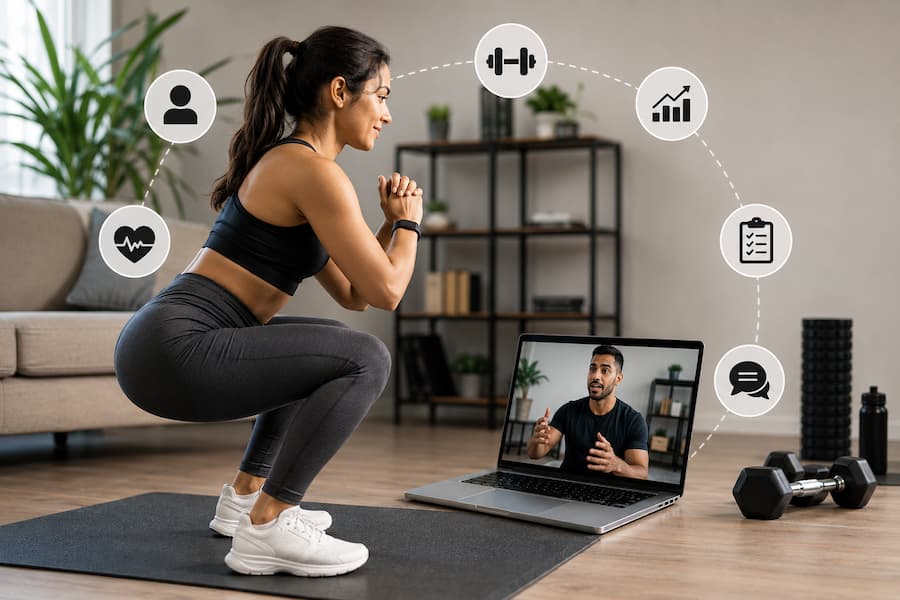
People are not necessarily looking for more information. They are often looking for structure, accountability, guidance, and a plan that adapts when real life inevitably gets in the way.
The question is whether online personal training can actually deliver those things.
What Most People Think a Personal Trainer Does
Ask someone what a personal trainer provides, and the answer is usually straightforward.
A workout plan.
Maybe a diet plan.
Perhaps a few motivational messages.
But effective coaching is usually much more than that.
A good personal trainer helps people navigate the gap between knowing what to do and actually doing it consistently.
That may include:
- Progress tracking
- Goal adjustments
- Accountability
- Habit development
- Exercise progression
- Nutrition guidance
- Problem-solving during setbacks
In other words, coaching is often less about creating a plan and more about helping people stick with one.
Why So Many Fitness Plans Fail
The fitness industry has never been short on plans.
The internet is full of free workout programs promising fat loss, muscle gain, six-pack abs, and dramatic transformations.
The problem is that most plans are static.
Life is not.
A workout routine may look perfect on a Sunday evening.
Then work becomes stressful.
Travel happens.
Sleep quality drops.
Someone gets sick.
Motivation disappears.
Suddenly the perfect plan no longer fits reality.
This is where many people quit.
Not because the plan was bad.
Because it was never designed to adapt.
Can Online Personal Training Replace a Gym Trainer?
For many people, surprisingly, yes.
Online personal training can be highly effective for:
- Weight loss
- Muscle building
- Beginner fitness
- Habit formation
- Nutrition guidance
- General health improvement
- Accountability and consistency
Modern online coaching often provides detailed workout plans, personalized nutrition recommendations, progress tracking, and ongoing feedback.
For someone whose primary goal is improving fitness, losing weight, or building healthier habits, online coaching may provide much of the same strategic guidance that traditional coaching offers.
However, there are situations where in-person coaching remains valuable.
Examples may include:
- Injury rehabilitation
- Complex movement corrections
- Specialized athletic training
- Certain medical conditions
- Complete beginners who require hands-on instruction
The best option often depends on individual needs rather than choosing one approach as universally superior.
The Biggest Advantage of Online Coaching
Convenience gets a lot of attention.
But it is probably not the biggest advantage.
The real benefit is accessibility.
Traditional personal training often requires scheduling sessions around gym hours, travel time, and trainer availability.
Online coaching allows guidance to fit around existing routines.
That matters because consistency usually depends on reducing friction.
The easier healthy behaviors become, the more likely people are to repeat them.
Accountability Matters More Than Motivation
Motivation is often treated as the secret ingredient behind successful transformations.
In reality, motivation is unreliable.
It changes constantly.
Some days people feel excited about their goals.
Other days they would rather skip the workout, order takeaway, and promise themselves they will start fresh next Monday.
Accountability helps bridge those fluctuations.
Research and real-world experience both suggest that adherence often matters more than finding the perfect program.
A decent plan followed consistently for six months will usually outperform an exceptional plan abandoned after two weeks.
That reality is far less exciting than most fitness advertisements, but it is also far closer to the truth.
What Makes Online Personal Training Effective?
The most successful online coaching systems usually share a few common characteristics.
They focus on:
- Personalization
- Progress tracking
- Adaptability
- Realistic goal setting
- Behavioral change
- Long-term consistency
Notice what is missing from that list.
There is no mention of miracle supplements, secret workout methods, or magical fat-burning tricks.
Because sustainable fitness results are rarely built on shortcuts.
The Future of Personal Training Is Becoming More Adaptive
Fitness coaching is evolving.
Instead of relying solely on static meal plans and generic workout PDFs, modern coaching increasingly combines:
- Activity tracking
- Nutrition planning
- Progress analytics
- Behavioral insights
- Digital accountability
- AI-assisted recommendations
This allows fitness guidance to become more responsive to real-world behavior.
Rather than waiting weeks to evaluate progress, modern systems can often identify trends, monitor consistency, and help people make adjustments before small setbacks become major obstacles.
The goal is not replacing human decision-making.
The goal is creating better support between coaching interactions.
Is Online Personal Training Worth It?
That depends on what someone expects.
If the goal is finding a magic solution that removes all effort, the answer is probably no.
No coach, app, workout plan, or technology can completely replace personal responsibility.
But if the goal is receiving structure, guidance, accountability, and a more personalized approach than generic fitness content provides, online personal training can be extremely valuable.
Especially for people who have spent years collecting information while struggling to turn that information into consistent action.
HealthyHold Take
The biggest misconception about online personal training is that it is simply about receiving a workout plan.
In reality, effective coaching is often about helping people stay consistent when life becomes unpredictable.
The most successful fitness journeys are rarely built on perfect motivation. They are usually built on systems that adapt, provide accountability, and make healthy decisions easier to repeat over time.