
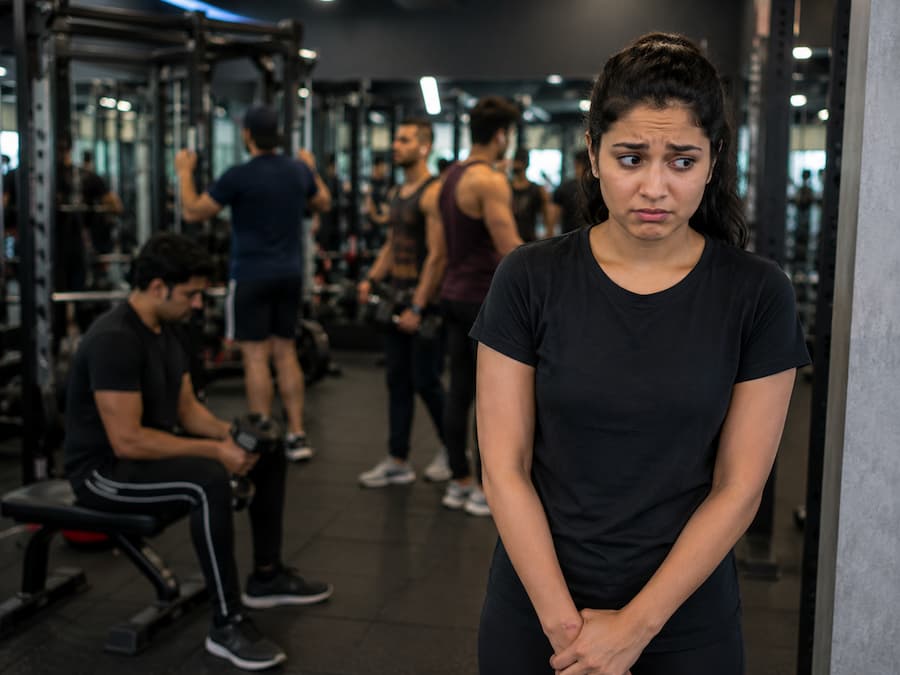
For many people, joining a gym begins with motivation.
New shoes. Fresh playlist. A sudden belief that life is about to transform by next Tuesday.
Then the first gym session happens.
Suddenly:
- every machine looks complicated
- everyone else appears experienced
- confidence disappears
- you forget how arms work
- and walking into the free weights section feels like entering a boss battle you were not prepared for
This experience is extremely common.
Gym anxiety affects many beginners, yet people rarely talk about it openly.
Most fitness journeys do not fail because people are lazy. They fail because intimidation, confusion, comparison, and discomfort quietly make consistency harder.
What Is Gym Anxiety?
Gym anxiety refers to feelings of stress, nervousness, embarrassment, or intimidation related to exercising in a gym environment.
It can include worries such as:
- being judged
- not knowing exercises
- using machines incorrectly
- looking inexperienced
- feeling out of shape
- exercising around fitter people
- social discomfort
For some people, these feelings are mild. For others, they become strong enough to avoid the gym entirely.
Social Comparison Happens Automatically
Humans naturally compare themselves to others.
In gym environments, beginners often compare themselves against:
- advanced lifters
- influencers
- highly fit members
- experienced athletes
The problem is that people usually compare their starting point to someone else’s middle or final chapter.
A beginner doing bodyweight squats may feel discouraged standing beside someone deadlifting twice their bodyweight.
But what often gets ignored is that experienced gym-goers were beginners once too.
Nobody enters the gym already knowing every machine, exercise angle, or protein shake flavor.
Fear of Looking Inexperienced
One of the biggest causes of gym anxiety is fear of embarrassment.
People worry about:
- incorrect form
- asking questions
- adjusting equipment
- not understanding exercises
- appearing weak or unfit
This fear creates self-consciousness that makes workouts mentally exhausting.
Ironically, most people in the gym are focused primarily on themselves.
The person you think is judging your treadmill speed is usually busy recovering from their own lung-burning leg workout and questioning every life decision that led them there.
Information Overload Creates Paralysis
Fitness content online has exploded.
Beginners are constantly exposed to:
- advanced routines
- conflicting advice
- complicated workout splits
- unrealistic transformations
- extreme dieting approaches
This often creates analysis paralysis.
People become so overwhelmed trying to find the perfect plan that they struggle to begin at all.
Simple routines usually work far better for beginners than overly complicated programs.
Unrealistic Expectations Increase Frustration
Many people expect rapid visible results.
When progress feels slower than expected, discouragement grows.
Fitness changes are gradual.
The body needs time to:
- adapt
- recover
- build strength
- improve endurance
- change body composition
Social media often compresses months or years of progress into short clips.
This creates unrealistic expectations about how quickly transformation should happen.
Why Beginners Often Quit Within Weeks
Several factors commonly push beginners away from consistency:
1. Starting too aggressively
Daily intense workouts often create burnout.
2. Excessive soreness
Overtraining early can make exercise feel physically miserable.
3. Lack of structure
Random workouts create confusion.
4. No visible short-term results
People underestimate how long sustainable progress takes.
5. Comparison mindset
Constant comparison reduces confidence.
6. Trying to be perfect
Missing one workout feels like failure.
All-or-nothing thinking is one of the biggest enemies of long-term fitness.
Confidence Usually Comes After Starting, Not Before
One of the biggest misconceptions in fitness is:
“I’ll start once I feel confident.”
In reality, confidence is usually built through repetition.
People become more comfortable because they:
- learn routines
- improve technique
- recognize equipment
- experience progress
- build familiarity
The gym often feels intimidating at first because the environment is unfamiliar.
Familiarity reduces anxiety over time.
Beginner-Friendly Fitness Works Better
Sustainable fitness does not require:
- complicated routines
- two-hour workouts
- advanced exercise knowledge
- extreme dieting
For many beginners, consistency improves dramatically with:
- shorter workouts
- simple exercise selection
- realistic schedules
- guided plans
- gradual progression
The best beginner program is usually not the most intense one. It is the one a person can realistically repeat consistently.
Home Workouts Are Also Valid
Some people genuinely prefer starting at home.
That is completely valid.
Fitness progress can absolutely begin through:
- walking
- resistance bands
- bodyweight exercises
- home dumbbell workouts
- yoga
- mobility routines
The goal is movement consistency. Not earning imaginary approval from gym purists online.
Accountability and Guidance Reduce Anxiety
Many beginners feel more comfortable when they have:
- structure
- guided workouts
- trainer support
- app-based instructions
- progress tracking
- realistic planning
Guidance reduces uncertainty.
And uncertainty is often what makes beginners feel overwhelmed in the first place.
Progress Looks Smaller Day to Day Than It Actually Is
Fitness progress is often subtle at first.
But over time:
- energy improves
- confidence increases
- movement feels easier
- strength grows
- routines become automatic
Many people quit before these positive adaptations fully appear.
Consistency matters more than dramatic motivation.
HealthyHold Take
Gym anxiety is real, common, and far more normal than people think.
Most beginners are not failing because they lack potential. They are simply trying to build confidence in an unfamiliar environment while comparing themselves too harshly.
Fitness does not require perfection. It requires patience, repetition, and realistic expectations.
A sustainable routine built slowly and consistently will always outperform a perfect routine that feels impossible to maintain.
Because long-term progress usually begins with simply showing up, even before confidence fully arrives.