
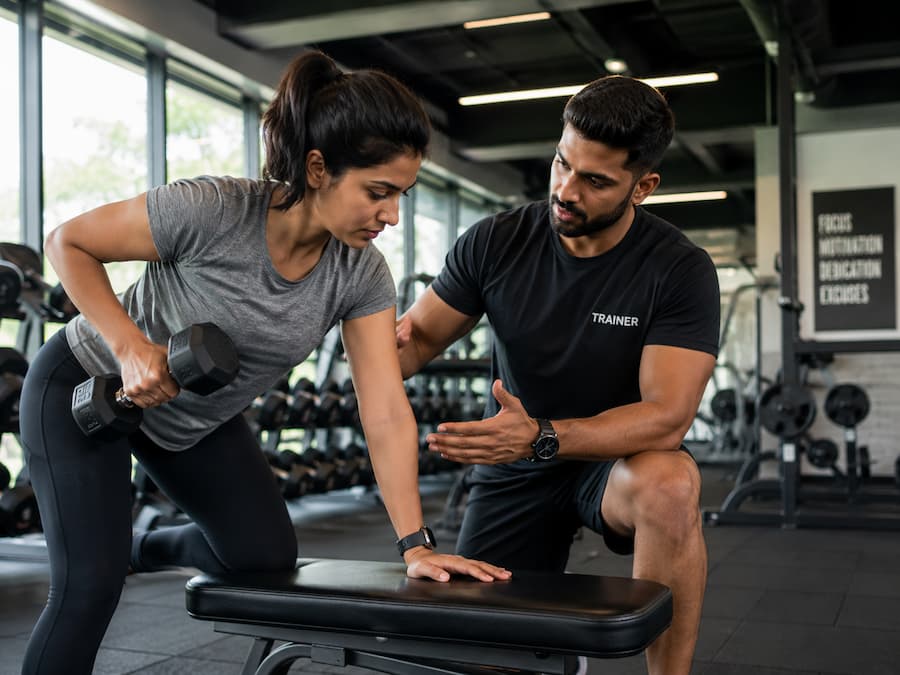
The fitness industry has created two very different opinions about personal trainers.
One side believes a trainer is absolutely essential. The other side thinks trainers are only for celebrities, athletes, or people who enjoy doing squats while being motivationally yelled at.
The truth is somewhere in between.
Not everyone needs a personal trainer. But many people benefit from guidance far more than they realize.
Because most fitness struggles are not caused by lack of information. They are caused by inconsistency, confusion, poor structure, unrealistic expectations, and trying to figure everything out alone.
What Does a Personal Trainer Actually Do?
A good personal trainer does far more than count repetitions.
A trainer may help with:
- workout structure
- exercise technique
- progression planning
- accountability
- goal setting
- injury prevention
- consistency
- confidence building
- habit formation
In many cases, people already know they should exercise.
The problem is not knowledge. The problem is:
- where to start
- what exercises to do
- how much is enough
- whether progress is happening
- how to stay consistent when life becomes busy
This is where guidance often becomes valuable.
Beginners Usually Benefit the Most
One of the biggest advantages of working with a trainer is reducing beginner confusion.
The internet contains:
- thousands of workout plans
- conflicting advice
- unrealistic transformations
- advanced routines meant for experienced athletes
For beginners, this can become overwhelming quickly.
Many people spend weeks jumping between random workouts without understanding:
- progression
- recovery
- exercise selection
- volume
- intensity
A structured approach usually works better than constantly restarting from scratch every Monday.
Accountability Changes Behavior
One of the most underrated benefits of coaching is accountability.
Human behavior changes when there is:
- structure
- tracking
- external support
- progress monitoring
- scheduled commitment
This is one reason many people stay more consistent when they feel supported.
Interestingly, accountability is not only about someone reminding you to work out.
It also creates:
- routine stability
- psychological commitment
- behavioral reinforcement
Because skipping a workout feels easier when nobody notices except your sofa.
Personalization Matters More Than Most People Think
Generic workout plans often fail because people have different:
- goals
- schedules
- injuries
- fitness levels
- recovery capacity
- mobility limitations
- preferences
- lifestyles
A college student, a new parent, and a corporate employee working 10-hour days probably should not follow identical routines.
Effective fitness plans usually adapt to real life.
For example:
- some people need shorter workouts
- some need home-based routines
- some need mobility-focused training
- some need gradual beginner progression
Personalization improves sustainability.
A Trainer Cannot Replace Your Effort
This part is important.
A trainer can provide guidance. They cannot outsource discipline for you.
Even the best coaching program cannot fully compensate for:
- poor sleep
- constant inconsistency
- unrealistic expectations
- ignoring nutrition
- expecting instant results
Fitness still requires participation.
Unfortunately, no trainer has yet discovered how to perform push-ups telepathically on behalf of clients.
Do You Need a Trainer Forever?
Not necessarily.
Some people use trainers temporarily to:
- learn exercise form
- build confidence
- establish habits
- understand programming
- stay accountable during early stages
Others prefer long-term coaching because they enjoy structure and progression.
Both approaches are valid.
The goal of good coaching is usually education and sustainability, not dependency.
Online Personal Trainers Changed the Fitness Industry
Online coaching has become increasingly popular because it offers:
- flexibility
- convenience
- remote accountability
- personalized plans
- progress tracking
- accessibility from anywhere
For busy professionals especially, online fitness coaching often fits more realistically into daily schedules.
Many people simply do not have the time to commute to a gym trainer multiple times per week.
Online coaching also allows:
- flexible scheduling
- app-based tracking
- habit monitoring
- easier communication
- home workout options
The quality still depends on the coach and system being used.
But online fitness guidance is no longer just a backup option. For many people, it has become the primary approach.
Signs You Might Benefit From a Trainer
You may benefit from guidance if:
- you keep restarting fitness repeatedly
- you feel confused about workouts
- you lack consistency
- you are unsure about exercise form
- you struggle with accountability
- you feel overwhelmed by information online
- you are not seeing progress despite effort
- you want structured progression
Sometimes the biggest benefit is simply reducing decision fatigue.
Because deciding what workout to do every day can become surprisingly exhausting.
Signs You May Not Need One Right Now
Some people are already:
- self-motivated
- experienced with training
- comfortable designing workouts
- consistent independently
- knowledgeable about recovery and progression
In those situations, independent training can work perfectly well.
Fitness success does not require coaching for everyone.
The Real Goal Is Consistency
Most people do not fail fitness because they chose the wrong exercise.
They fail because they stop.
A sustainable system matters far more than temporary bursts of motivation.
Whether that support comes from:
- a trainer
- a structured app
- a workout community
- a training partner
- habit tracking
consistency is usually the deciding factor.
HealthyHold Take
A personal trainer is not magic. But guidance, accountability, structure, and personalization can dramatically reduce the confusion and inconsistency that prevent many people from making progress.
The best fitness plan is not necessarily the most advanced one. It is the one you can realistically follow consistently while balancing real life.
Because sustainable health is usually built through support systems, repeatable habits, and routines that fit into everyday life instead of constantly fighting against it.