
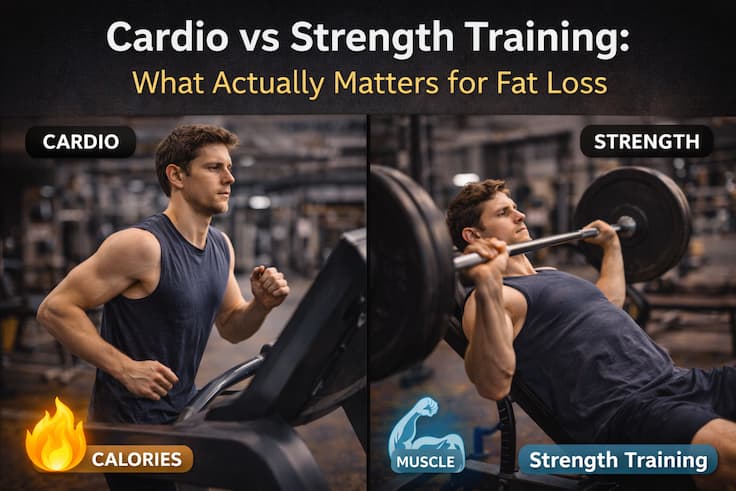
Few gym debates are as stubborn as cardio versus strength training for fat loss. One camp swears by endless sweating. The other refuses to touch a treadmill. Both sides are confident. Both are incomplete.
Fat loss does not care about loyalty. It responds to energy balance, muscle preservation, and consistency over time. Cardio and strength simply influence these variables in different ways.
What Fat Loss Actually Is
Fat loss happens when the body uses more energy than it takes in over time. This is not controversial. What gets confusing is how different types of training affect this balance.
Exercise helps create the energy gap, but diet controls most of it. Training determines how much muscle you keep while losing weight.
What Cardio Does Well
Cardio increases energy expenditure during the session. Walking, running, cycling, swimming, and rowing burn calories efficiently.
Key benefits of cardio for fat loss:
- Higher immediate calorie burn
- Improved cardiovascular health
- Better insulin sensitivity
- Easier recovery between sessions
Cardio is especially effective for beginners and for people who enjoy steady movement. Enjoyment matters more than optimization.
Where Cardio Falls Short
Cardio alone does not signal the body to preserve muscle mass strongly.
When weight loss relies heavily on cardio without resistance training, a portion of weight lost often comes from muscle tissue. This can reduce metabolic rate and lead to the familiar pattern of losing weight but not looking or feeling stronger.
More cardio also tends to increase hunger, which can quietly erase the calorie deficit.
What Strength Training Does Well
Strength training sends a clear signal to retain muscle during a calorie deficit.
Key benefits of strength training for fat loss:
- Preserves lean mass
- Improves body composition
- Supports resting metabolic rate
- Improves insulin sensitivity
Weight loss with resistance training often results in a leaner appearance at the same body weight.
Where Strength Training Falls Short
Strength training burns fewer calories per session compared to cardio, especially for beginners.
It also requires more technical learning, recovery management, and patience. Progress is slower to feel but more durable.
The EPOC Myth
Excess post-exercise oxygen consumption, often marketed as the afterburn effect, exists but is small.
Research shows that EPOC contributes minimally to total calorie expenditure compared to overall daily activity and diet. It is not a fat-loss shortcut.
What Research Consistently Shows
Studies comparing cardio-only, strength-only, and combined training show a clear pattern.
- Cardio improves weight loss scale numbers
- Strength training improves body composition
- Combined training produces the best overall fat loss outcomes
Combining both leads to greater fat loss while preserving muscle, improving health markers, and maintaining performance.
What Actually Matters More Than the Modality
The biggest drivers of fat loss success are:
- Total weekly activity
- Calorie intake consistency
- Protein intake
- Sleep and stress management
- Long-term adherence
A perfect program that you cannot maintain loses to a simple one you follow.
How to Choose the Right Balance
For beginners:
- Prioritize daily movement
- Add two to three strength sessions weekly
- Use cardio as a tool, not punishment
For fat loss with muscle retention:
- Strength train three to four times per week
- Add moderate cardio for calorie support
For time-limited schedules:
- Choose the mode you enjoy
- Focus on consistency first
The Bottom Line
Cardio versus strength is the wrong question.
Fat loss works best when you use cardio to support energy balance and strength training to protect muscle. Neither replaces the other. Both serve different roles.
Choose the combination you can sustain. Fat loss is not won by allegiance. It is won by consistency.