
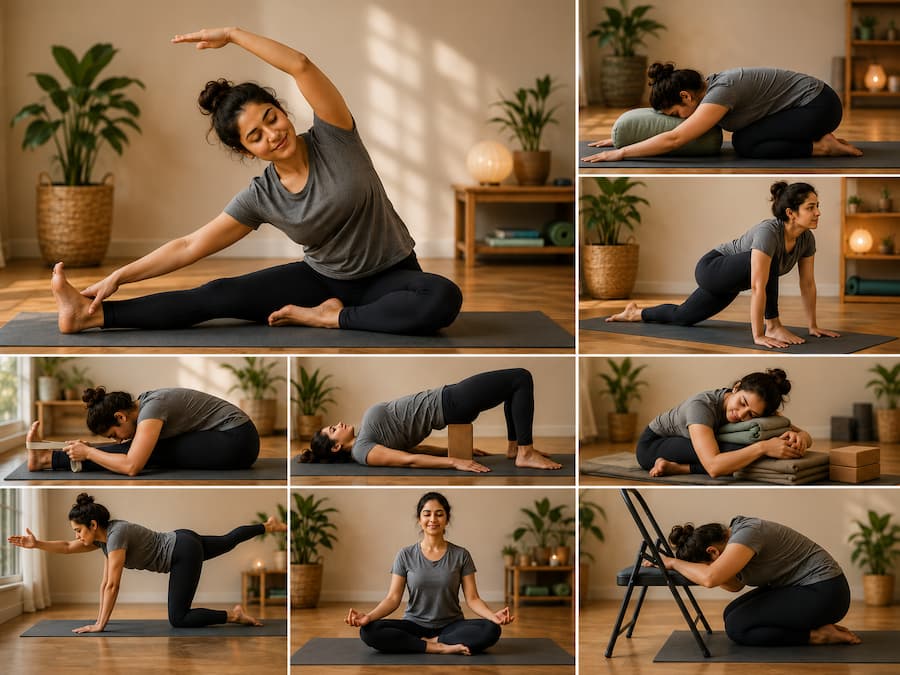
One of the most common reasons people avoid yoga is surprisingly simple:
“I’m not flexible enough.”
This belief is everywhere.
People assume yoga is only for individuals who can:
- touch their toes effortlessly
- fold themselves into geometric shapes
- balance calmly on one hand while breathing like a peaceful mountain monk
Meanwhile, many beginners struggle to sit cross-legged for five minutes without negotiating with their lower back.
The good news is this:
You do not need to be flexible to start yoga.
In fact, many people begin yoga precisely because they feel stiff, tight, uncomfortable, or physically restricted.
Flexibility is not the entry requirement. It is often the gradual result.
Yoga Is Not a Flexibility Competition
Modern social media has unintentionally made yoga look intimidating.
Online, yoga is often represented through:
- advanced poses
- extreme flexibility
- difficult inversions
- highly experienced practitioners
But traditional yoga practice is much broader than advanced postures.
Yoga can help improve:
- mobility
- posture
- balance
- breathing awareness
- stress regulation
- body control
- recovery
- movement confidence
Many beginner-friendly yoga practices involve simple, controlled movements and breathing patterns.
Tight Muscles Are Extremely Common Today
Modern lifestyles contribute heavily to stiffness.
Long hours of:
- sitting
- desk work
- commuting
- screen time
- reduced movement
can create tightness in areas like:
- hips
- hamstrings
- shoulders
- lower back
- chest
This is especially common among people who spend most of the day seated.
The body adapts to repeated positions.
When movement variety decreases, mobility often decreases too.
Flexibility Improves Gradually Through Consistency
One important thing beginners should understand:
Flexibility usually develops slowly.
The body responds to repeated movement exposure over time.
Trying to force flexibility aggressively often increases discomfort and injury risk.
Gentle consistent practice generally works better than trying to stretch like your hamstrings personally insulted you.
Small improvements accumulate.
Over time many people notice:
- easier movement
- reduced stiffness
- improved posture
- better range of motion
- improved body awareness
Yoga Is About Awareness, Not Perfection
One of the healthiest aspects of yoga is that it encourages body awareness.
Instead of competing with others, yoga often emphasizes:
- breathing
- control
- alignment
- stability
- mindfulness
- gradual progression
This mindset can feel refreshing for people tired of all-or-nothing fitness culture.
Yoga does not require perfect poses. It requires participation.
Breathing Plays a Bigger Role Than Most People Realize
Yoga breathing practices can influence:
- relaxation
- stress levels
- focus
- nervous system regulation
Many people unknowingly breathe shallowly during stressful days.
Controlled breathing exercises may help improve body awareness and calmness during practice.
This is one reason yoga often feels mentally restorative in addition to physically beneficial.
Beginners Often Improve Faster Than Expected
Many people assume they need months of preparation before beginning yoga.
But beginner-friendly yoga routines are specifically designed for gradual adaptation.
The body often responds positively to:
- gentle mobility work
- controlled stretching
- regular movement
- improved posture awareness
Even practicing a few times weekly can create noticeable improvements over time.
You Do Not Need Expensive Equipment
One underrated advantage of yoga is accessibility.
Many yoga sessions require very little equipment beyond:
- comfortable clothing
- floor space
- a yoga mat
This makes yoga approachable for:
- home workouts
- beginners
- busy professionals
- travel routines
- low-impact fitness goals
Yoga Can Complement Other Forms of Exercise
Yoga does not need to replace strength training or cardio.
In fact, yoga often works well alongside:
- gym workouts
- walking
- cycling
- sports training
- strength programs
Mobility and recovery support can improve overall movement quality and reduce stiffness from repetitive training.
Comparison Often Stops People Before They Begin
Many beginners feel discouraged because they compare themselves to advanced practitioners.
But flexibility varies naturally between individuals.
Factors include:
- genetics
- age
- injury history
- lifestyle
- activity levels
- previous movement experience
Progress should be measured against your own starting point.
Not someone online who has been practicing consistently for eight years while casually bending like cooked spaghetti.
Gentle Progress Is Still Progress
Some people avoid yoga because they believe they are ‘bad’ at it.
But struggling with flexibility does not mean yoga is failing. It often means the body is adapting.
The goal is not instant perfection. The goal is gradual improvement in movement quality and comfort.
Consistency Matters More Than Intensity
Practicing briefly and consistently often works better than forcing long difficult sessions.
Even:
- 10 to 20 minutes daily
- a few sessions weekly
- beginner mobility routines
can create meaningful long-term benefits.
Sustainable movement habits are usually more valuable than occasional extreme effort.
HealthyHold Take
Yoga is not reserved for flexible people.
In many cases, the people who benefit the most are those who feel stiff, uncomfortable, stressed, or disconnected from regular movement.
You do not need perfect flexibility to begin. You simply need patience, consistency, and willingness to move gradually.
Because flexibility is not where most yoga journeys start. It is often where consistent practice slowly leads over time.