
Search for a free diet plan for weight loss and you will find thousands of options.
Some promise rapid fat loss in a week. Others expect you to survive on salads, soups, and a level of willpower normally reserved for reality TV survival shows.
The problem is not that people lack motivation.
The problem is that many diet plans are written for perfect days.
They assume you will wake up early, prepare every meal from scratch, never attend social events, never crave dessert, never work late, and somehow remain enthusiastic about boiled vegetables for an entire month.
Real life tends to be less cooperative.
That is why sustainable weight loss usually depends less on finding the perfect diet and more on finding a plan you can realistically follow when life becomes busy, stressful, and occasionally chaotic.
Before Choosing a Diet Plan, Understand This
Weight loss ultimately requires a calorie deficit, meaning the body uses more energy than it receives from food over time.
But calorie numbers alone do not tell the full story.
A diet that leaves you hungry, exhausted, and constantly thinking about food may technically create a calorie deficit, but it often becomes difficult to maintain.
The most successful weight loss plans usually focus on:
- Protein intake
- Fiber-rich foods
- Reasonable portions
- Hydration
- Consistency
- Flexibility
Not punishment.
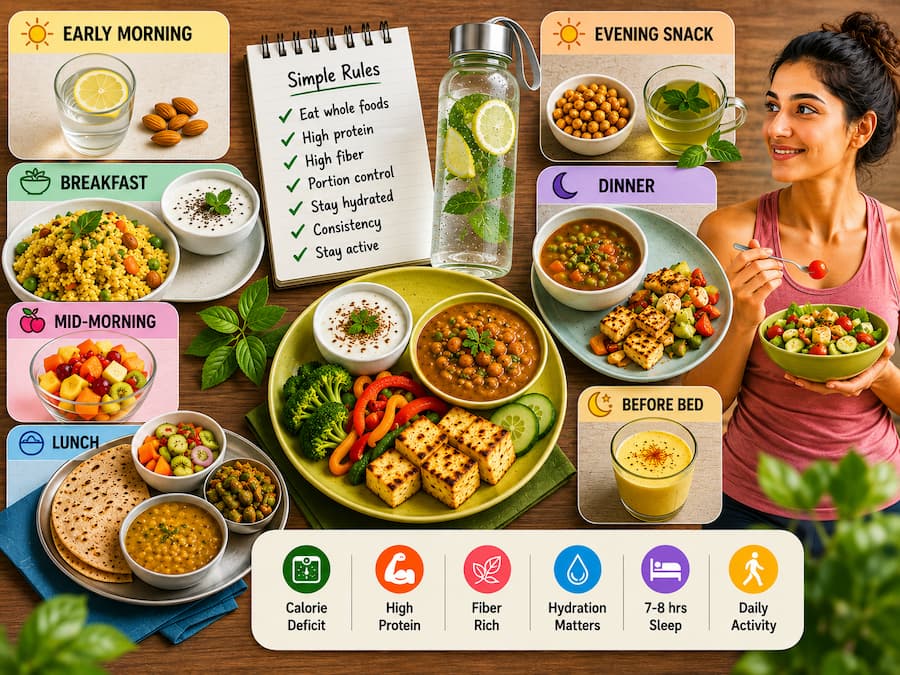
Free Weight Loss Diet Plan (Approx. 1200–1500 Calories)
This example is designed for general educational purposes and may not be appropriate for everyone.
Breakfast
- Vegetable poha with peanuts
- 1 bowl curd
- Unsweetened tea or coffee
Mid-Morning
- 1 apple or orange
Lunch
- 2 rotis
- 1 bowl dal
- Mixed vegetable sabzi
- Salad
Evening Snack
- Roasted chana or sprouts chaat
- Green tea or black coffee if preferred
Dinner
- Paneer bhurji or grilled chicken
- Mixed vegetables
- 1 roti or small serving of rice
This type of meal structure helps provide protein, fiber, and better satiety compared to highly processed convenience foods.
Free Weight Loss Diet Plan (Approx. 1500–1800 Calories)
People with higher activity levels often require more food to support energy, recovery, and adherence.
Breakfast
- Moong dal chilla with paneer filling
- Fruit
Mid-Morning
- Buttermilk
- Handful of nuts
Lunch
- 2 to 3 rotis
- Dal
- Vegetable sabzi
- Salad
Evening Snack
- Greek yogurt or curd
- Fruit
Dinner
- Grilled chicken, fish, tofu, or paneer
- Vegetables
- Small serving of rice or roti
The goal is not eating as little as possible.
The goal is creating a calorie deficit that still feels manageable.
Why Protein Makes Dieting Easier
One reason many weight loss plans fail is because they focus entirely on reducing calories while ignoring satiety.
Protein-rich foods may help people feel fuller for longer and can contribute to muscle preservation during weight loss.
Examples include:
- Eggs
- Paneer
- Greek yogurt
- Fish
- Chicken
- Dal
- Tofu
- Sprouts
A breakfast with adequate protein often feels very different from one built entirely around refined carbohydrates.
What Usually Happens After the First Week
Most diet plans look easy during the first few days.
The real challenge begins when motivation fades.
Work deadlines appear.
Family events happen.
Sleep gets disrupted.
Someone orders dessert.
Life starts behaving like life.
This is where overly restrictive plans often collapse.
Successful weight loss usually depends on having enough flexibility to navigate imperfect days without abandoning the entire process.
Common Mistakes That Make Weight Loss Harder
Many people unknowingly sabotage progress through habits that seem harmless.
These may include:
- Drinking calories throughout the day
- Skipping protein-rich meals
- Constant weekend overeating
- Poor sleep habits
- Extremely restrictive dieting followed by binge eating
- Relying heavily on ultra-processed foods
Weight loss struggles are often the result of accumulated habits rather than one specific food.
Why Generic Diet Plans Do Not Work for Everyone
Two people can follow the exact same meal plan and experience completely different results.
Factors such as:
- Age
- Body weight
- Activity levels
- Medical history
- Food preferences
- Sleep quality
- Stress levels
all influence how a plan feels and performs.
This is one reason nutrition is gradually moving toward more personalized and adaptive approaches rather than rigid one-size-fits-all meal templates.
The Best Diet Plan Is Usually the Simplest One
The internet often makes weight loss sound complicated.
In reality, sustainable progress usually comes from consistently doing basic things well:
- Eating enough protein
- Managing portions
- Walking regularly
- Sleeping better
- Staying hydrated
- Reducing ultra-processed foods
None of these strategies are particularly exciting.
That is partly why they work.
HealthyHold Take
The best free diet plan for weight loss is rarely the one with the fewest calories or the most restrictive food rules.
It is usually the one you can still follow on busy workdays, during social events, and when motivation inevitably drops.
Sustainable weight loss tends to come from realistic habits repeated consistently rather than extreme diets that depend on perfect conditions.
Important Note
This article is intended for general health and wellness education only and should not be considered medical advice, diagnosis, or treatment. Calorie needs vary based on age, sex, body weight, activity levels, medical conditions, and health goals. Consult a qualified healthcare professional or registered dietitian for personalized nutrition guidance.