
The internet loves short deadlines.
Lose weight in 10 days. Flatten your stomach in a week. Drop multiple kilograms before a wedding, vacation, or event.
And technically, people can lose noticeable weight within 10 days.
The important question is: How much of that is actually body fat?
Because rapid scale changes are often misunderstood.
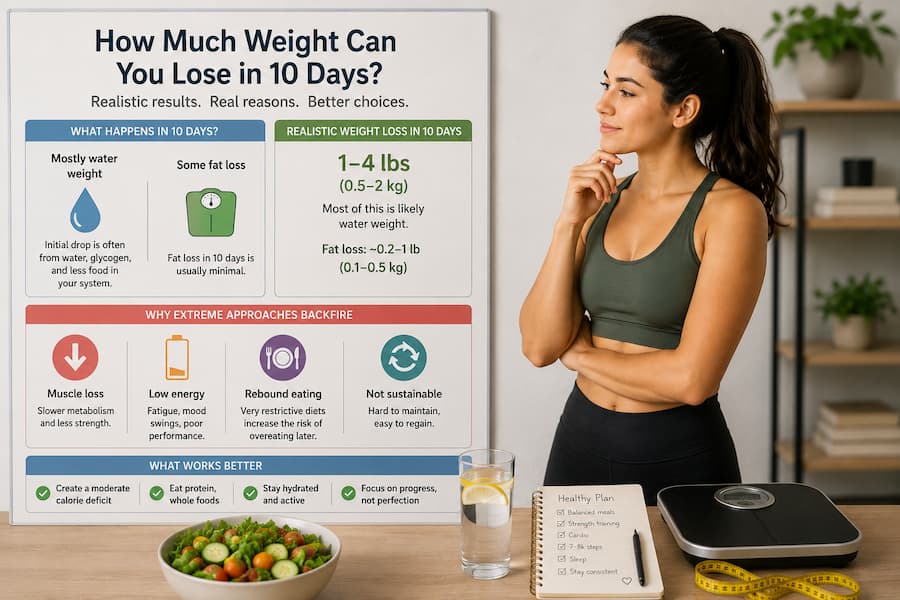
Yes, You Can Lose Weight in 10 Days
Body weight can absolutely decrease within 10 days.
But the body is not only losing fat during that period.
Short-term weight changes often involve:
- Water loss
- Glycogen depletion
- Reduced food volume in the digestive system
- Lower sodium-related water retention
- Some body fat reduction
This is why many people notice dramatic early changes when they suddenly clean up their diet or reduce processed foods.
The scale moves quickly at first.
That does not necessarily mean pure fat loss is happening at the same speed.
So What Is Realistic?
For many people, losing around 0.5 to 2 kilograms of actual body fat within 10 days is a more realistic range depending on:
- Starting body weight
- Calorie deficit
- Activity levels
- Water retention
- Carbohydrate intake
- Sleep quality
- Hormonal factors
Some people may see larger scale drops initially, especially if they were previously consuming:
- High sodium diets
- Excess ultra-processed foods
- Sugary beverages
- Large portions
- Frequent restaurant meals
A sudden improvement in eating habits often reduces bloating and water retention quickly.
Why Rapid Early Weight Loss Happens
Carbohydrates are stored in the body as glycogen.
Glycogen also holds water.
When calorie intake drops or carbohydrate intake decreases, glycogen stores shrink and water is released.
This is one reason low-carb diets often produce dramatic early scale changes.
The body becomes lighter quickly.
But that does not mean several kilograms of pure body fat disappeared within days.
The Problem With Extreme 10-Day Diets
A lot of aggressive short-term diets rely on:
- Severe calorie restriction
- Excessive cardio
- Dehydration
- Skipping meals
- Detox products
- Unsustainable food rules
These approaches may create temporary scale reductions.
But they also increase the risk of:
- Fatigue
- Muscle loss
- Dizziness
- Cravings
- Poor workout recovery
- Mood changes
- Rebound overeating
Many people finish these plans lighter but mentally exhausted.
And once normal eating resumes, much of the lost weight returns quickly.
Fast Fat Loss Usually Has Trade-Offs
The faster someone tries to lose weight, the harder the body often pushes back.
Aggressive dieting may increase hunger hormones and reduce energy levels.
This is one reason people often feel:
- Constantly hungry
- Irritable
- Mentally foggy
- Obsessed with food
- Physically drained
The issue is not lack of willpower.
The issue is that the body generally does not enjoy extreme deprivation.
What Actually Helps During Short-Term Fat Loss
Short-term progress tends to work better when people focus on sustainable fundamentals instead of punishment.
That may include:
- Higher protein intake
- Walking regularly
- Strength training
- Better sleep
- Reducing liquid calories
- Increasing fiber intake
- Eating fewer ultra-processed foods
- Improving portion awareness
These habits may not look dramatic online.
But they usually create better results than crash dieting.
The Scale Is Not the Only Measure of Progress
Many people become discouraged if they do not lose massive amounts of weight quickly.
But healthy progress may also include:
- Reduced bloating
- Better digestion
- Improved energy
- Better sleep quality
- Less sugar craving
- Improved stamina
- Better appetite control
These changes matter even if the scale moves slower than expected.
Why People Regain Weight After Rapid Dieting
Extreme short-term diets often fail because they depend on unsustainable restriction.
Once the diet ends, people frequently return to:
- Old eating habits
- Stress eating
- Irregular meal timing
- Low activity levels
The body also restores glycogen and water stores, causing rapid scale rebound.
This creates the illusion that the body is "broken" when it is often simply recovering from aggressive restriction.
HealthyHold Take
Losing some weight within 10 days is possible, especially when improving food quality, reducing processed foods, and increasing movement.
But sustainable fat loss rarely happens as dramatically as internet transformation culture suggests.
The goal should not just be becoming lighter quickly.
The goal should be improving body composition, energy, consistency, and long-term health without pushing the body into exhaustion.
Important Note
This article is intended for general health and wellness education only and should not be considered medical advice, diagnosis, or treatment. Rapid weight loss methods may not be appropriate for everyone, especially individuals with diabetes, eating disorders, hormonal conditions, or underlying medical concerns. Consult a qualified healthcare professional before starting aggressive diet or exercise programs.