
One of the most misleading things about modern weight loss culture is how quickly people expect the body to change.
Social media timelines often make fat loss look linear, dramatic, and almost effortless.
In reality, healthy weight loss is usually slower, less visually dramatic, and far more inconsistent than transformation videos suggest.
Some weeks the scale drops. Some weeks it barely moves. Sometimes it even increases temporarily despite genuine effort.
That does not always mean progress has stopped.
So What Is Actually Considered Healthy Weight Loss?
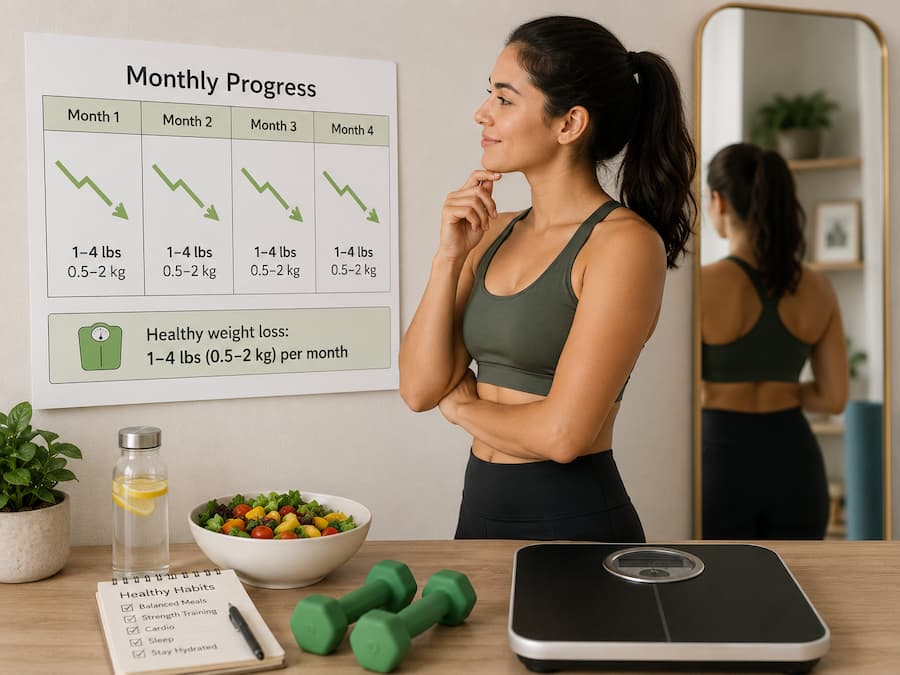
For many adults, research generally suggests that losing around 2 to 4 kilograms per month is considered a realistic and sustainable range.
This varies depending on:
- Starting body weight
- Muscle mass
- Activity levels
- Sleep quality
- Dietary habits
- Medical conditions
- Stress levels
- Water retention fluctuations
People with higher starting body weight may initially lose weight faster, especially during the first few weeks.
Part of that early drop is often water weight and glycogen depletion rather than pure body fat reduction.
That is why extremely rapid early progress does not always continue at the same speed later.
Why Slower Fat Loss Is Often More Sustainable
Aggressive dieting sounds appealing emotionally.
But the body usually responds differently than motivational content suggests.
Very rapid weight loss may increase the risk of:
- Muscle loss
- Fatigue
- Nutrient deficiencies
- Low workout performance
- Increased cravings
- Poor sleep
- Mood changes
- Rebound overeating
Many people do not fail because they lack discipline.
They fail because the strategy itself becomes physically and mentally exhausting.
The body is not designed to enjoy extreme deprivation for long periods.
The Scale Does Not Tell the Full Story
One of the biggest reasons people quit too early is misunderstanding scale fluctuations.
Body weight naturally changes because of:
- Sodium intake
- Carbohydrate intake
- Hormonal fluctuations
- Sleep quality
- Stress
- Digestion
- Water retention
- Menstrual cycle changes
Someone can genuinely lose body fat while seeing little movement on the scale for several days.
This is especially common when people start strength training, improve hydration, or increase protein intake.
Short-term fluctuations are normal.
Obsessing over daily weight changes usually creates unnecessary frustration.
Fast Weight Loss Is Not Always Fat Loss
A lot of dramatic "before and after" results online involve temporary reductions in:
- Water weight
- Food volume inside the digestive system
- Glycogen storage
This is particularly common with:
- Extremely low-carb diets
- Severe calorie restriction
- Dehydration-based strategies
- Excessive cardio
The problem is not losing water weight temporarily.
The problem is mistaking temporary depletion for sustainable fat loss.
What Healthy Progress Often Looks Like
Real fat loss is usually less dramatic but more stable.
People often notice:
- Better energy levels
- Improved mobility
- Reduced bloating
- Better sleep
- Increased strength
- Improved stamina
- Clothes fitting differently
- Better appetite control
Sometimes these changes appear before major visual transformation happens.
That is why relying only on the scale can be misleading.
Why Muscle Preservation Matters
Losing weight too aggressively may reduce muscle mass alongside fat.
That matters because muscle helps support:
- Strength
- Mobility
- Recovery
- Metabolic health
- Long-term weight maintenance
This is why many sustainable fat loss plans emphasize:
- Protein intake
- Strength training
- Recovery
- Adequate sleep
Weight loss that preserves muscle usually creates better long-term results than rapid crash dieting.
The Psychological Side of Unrealistic Expectations
A lot of people quietly assume:
- "If I am not losing weight fast, nothing is working."
That mindset creates unnecessary pressure.
The reality is that healthy body change often looks boring.
It involves:
- Repeating simple meals
- Walking regularly
- Sleeping better
- Training consistently
- Managing stress
- Staying patient through plateaus
These habits rarely go viral online.
But they are usually what produce sustainable results.
What Usually Helps Most
People who lose weight sustainably often focus less on shortcuts and more on repeatable behaviors.
That may include:
- Eating more protein and fiber
- Reducing ultra-processed foods
- Increasing daily movement
- Building realistic meal routines
- Improving sleep timing
- Strength training consistently
- Avoiding all-or-nothing dieting
The goal is not perfection.
The goal is creating a calorie deficit the body can tolerate without constant exhaustion.
HealthyHold Take
Healthy weight loss is usually slower than internet transformation culture suggests and far more sustainable than crash dieting.
The most effective fat loss plans are often the least dramatic.
They improve health, energy, recovery, and consistency alongside body composition instead of sacrificing everything for temporary scale changes.
Important Note
This article is intended for general health and wellness education only and should not be considered medical advice, diagnosis, or treatment. Healthy weight loss ranges vary between individuals depending on medical history, medications, hormonal health, and lifestyle factors. Consult a qualified healthcare professional before beginning significant dietary or exercise changes.