
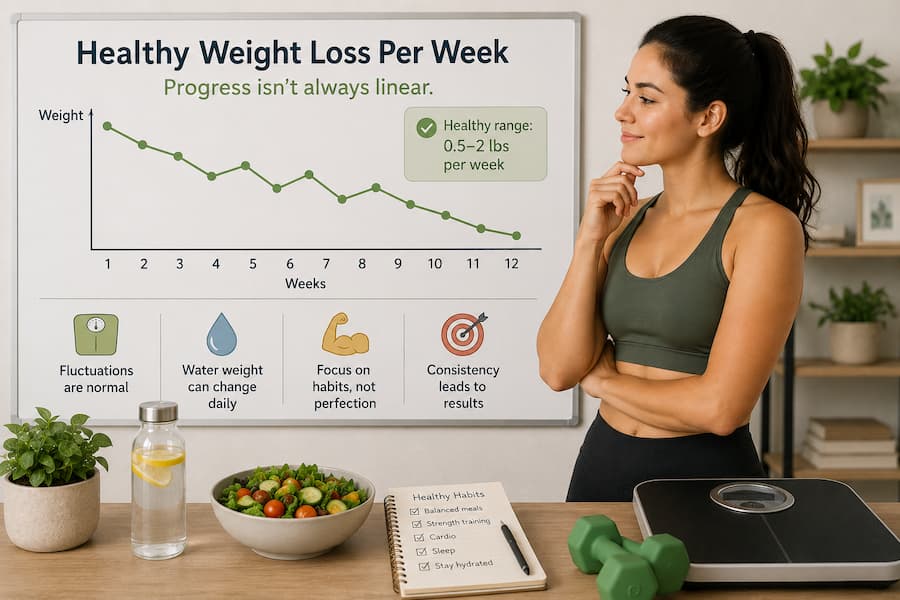
A lot of people quietly assume that if the scale is not dropping rapidly every week, something is failing.
That belief is one of the biggest reasons people abandon perfectly good fat loss plans too early.
Modern transformation culture has created unrealistic expectations around how quickly the human body should change.
In reality, healthy weight loss is usually slower, less dramatic, and far more inconsistent than social media timelines suggest.
What Is Considered Healthy Weight Loss Per Week?
For many adults, losing around 0.5 to 1 kilogram per week is generally considered a realistic and sustainable range.
This varies depending on:
- Starting body weight
- Activity levels
- Muscle mass
- Sleep quality
- Calorie intake
- Stress levels
- Hormonal factors
- Water retention
People with higher starting body weight may initially lose weight faster, especially during the first few weeks.
That early drop is often partly related to water loss and reduced glycogen storage rather than pure fat reduction.
This is why dramatic early progress does not always continue at the same speed.
Why Faster Is Not Always Better
The internet often treats aggressive dieting like proof of discipline.
But the body does not always interpret rapid restriction positively.
Very aggressive calorie deficits may increase the risk of:
- Muscle loss
- Fatigue
- Cravings
- Mood changes
- Poor workout recovery
- Low energy levels
- Binge eating episodes
- Reduced long-term consistency
Many people do not struggle because they are lazy.
They struggle because the plan itself becomes mentally and physically exhausting.
A fat loss strategy that feels impossible to sustain usually does not remain effective for very long.
The Scale Fluctuates More Than People Expect
One of the most frustrating parts of weight loss is that body weight naturally fluctuates.
Sometimes significantly.
Daily changes can happen because of:
- Sodium intake
- Carbohydrate intake
- Poor sleep
- Stress
- Digestion
- Hormonal shifts
- Menstrual cycle changes
- Water retention
Someone can genuinely lose body fat while the scale temporarily stalls for several days.
That does not necessarily mean progress has stopped.
This is why obsessing over daily scale changes often creates unnecessary anxiety.
Fat Loss Is Not the Same as Weight Loss
The body is not only losing fat during rapid dieting.
It may also lose:
- Water
- Glycogen
- Muscle tissue
- Digestive food volume
This is why some crash diets create dramatic short-term scale changes.
The issue is that extreme approaches are often difficult to maintain once normal eating resumes.
Sustainable fat loss usually looks slower but steadier.
What Healthy Weekly Progress Often Looks Like
Many people expect visible transformation every seven days.
Real progress is often more subtle.
You may notice:
- Reduced bloating
- Better stamina
- Improved sleep
- Better appetite control
- Increased workout performance
- Clothes fitting differently
- Improved mobility
- Less afternoon fatigue
These changes matter.
Sometimes they appear before major visual changes become obvious.
Why Muscle Preservation Matters During Weight Loss
Rapid dieting without adequate protein or resistance training may increase muscle loss.
That matters because muscle supports:
- Strength
- Recovery
- Metabolic health
- Physical function
- Long-term weight maintenance
This is one reason sustainable fat loss plans often include:
- Protein-rich meals
- Strength training
- Adequate sleep
- Recovery days
The goal is not simply becoming lighter.
The goal is improving body composition and overall health.
Social Media Often Distorts Expectations
Online transformation content frequently hides important context.
Some rapid transformations involve:
- Temporary dehydration
- Highly restrictive diets
- Extreme cardio routines
- Selective lighting and posing
- Unsustainable calorie deficits
This creates the illusion that healthy fat loss should happen dramatically fast every single week.
Real life is usually less cinematic.
And that is completely normal.
Habits Usually Matter More Than Intensity
People who maintain long-term fat loss often rely on repeatable systems rather than constant motivation.
That may include:
- Walking regularly
- Eating more protein and fiber
- Reducing ultra-processed foods
- Building realistic meal timing
- Sleeping consistently
- Managing stress better
- Training several times per week
None of these feel extreme.
That is partly why they are sustainable.
HealthyHold Take
Healthy weekly weight loss is usually slower and less dramatic than internet culture suggests.
The body responds better to consistency, recovery, and sustainable habits than constant nutritional punishment.
A good fat loss plan should improve health and energy alongside body composition instead of leaving people exhausted, hungry, and burned out.
Important Note
This article is intended for general health and wellness education only and should not be considered medical advice, diagnosis, or treatment. Healthy weight loss ranges vary between individuals depending on medical conditions, medications, hormonal health, and lifestyle factors. Consult a qualified healthcare professional before making major dietary or exercise changes.