
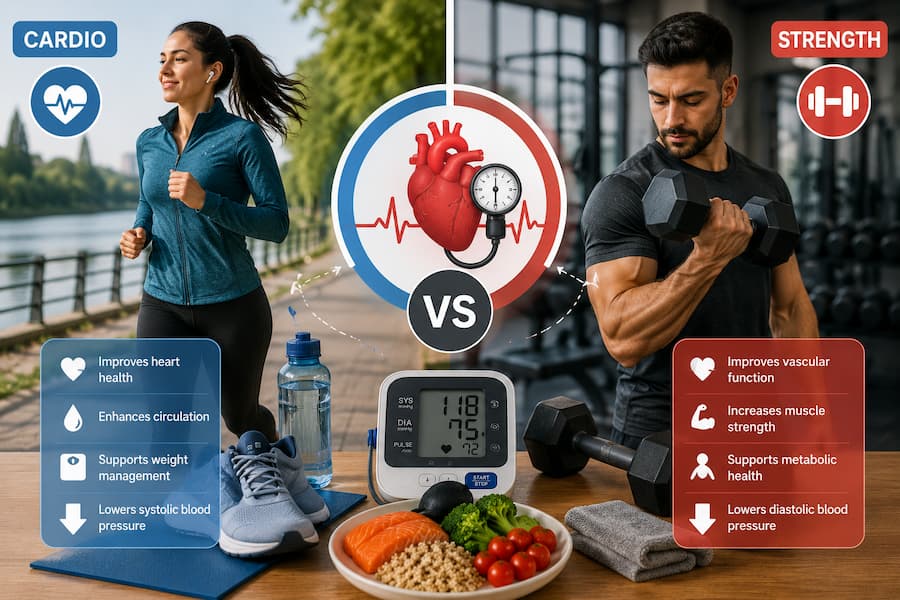
When people hear the words “high blood pressure,” the conversation usually turns into a predictable fitness debate.
One side insists everyone should start running. The other side argues strength training is the real solution. Somewhere in the middle is the reality most people actually need: both forms of exercise can support blood pressure health, but they affect the body differently.
The bigger issue is that blood pressure is rarely influenced by exercise alone.
Sleep quality, stress, sodium intake, body weight, alcohol consumption, recovery, medications, and long hours of inactivity all contribute to the picture. Exercise helps, but it is not a magical shield against a lifestyle built entirely around stress, poor sleep, and takeaway food eaten in front of glowing screens at midnight.
Why Exercise Helps Blood Pressure in the First Place
Blood pressure is influenced by how hard the heart needs to work to move blood through the body.
Regular physical activity may help improve:
- Blood vessel flexibility
- Circulation efficiency
- Heart function
- Weight management
- Insulin sensitivity
- Stress regulation
Over time, these changes can contribute to healthier blood pressure levels.
The important word there is “over time.”
A single workout does not permanently fix blood pressure. The body responds to consistent patterns, not occasional bursts of motivation after watching two fitness reels and buying new running shoes.
Cardio and Blood Pressure: Why It Is Commonly Recommended
Cardio, also called aerobic exercise, includes activities like:
- Walking
- Jogging
- Cycling
- Swimming
- Dancing
- Rowing
Aerobic exercise is strongly associated with cardiovascular benefits because it trains the heart and circulatory system to work more efficiently.
Research suggests regular aerobic activity may help lower resting blood pressure in many individuals, especially when performed consistently.
One reason cardio helps is because it improves how efficiently blood vessels expand and contract during circulation.
Even moderate activities like brisk walking can be valuable.
This matters because many people assume exercise only counts if it leaves them collapsed on the floor questioning their life choices.
Strength Training Also Plays an Important Role
For years, strength training was underestimated in cardiovascular conversations.
That has changed.
Resistance training may support blood pressure health indirectly through improvements in:
- Muscle mass
- Insulin sensitivity
- Body composition
- Metabolic health
- Functional fitness
Stronger muscles also improve long-term physical capacity, which can make everyday movement easier and reduce sedentary behavior.
That matters more than people realize.
Someone with better muscle strength is often more physically active overall throughout the day, even outside formal workouts.
Does Strength Training Raise Blood Pressure?
During heavy lifting, blood pressure temporarily rises.
That sounds alarming until you realize many normal physical activities temporarily increase blood pressure too.
The important distinction is between temporary exercise-related increases and long-term resting blood pressure trends.
Research suggests properly programmed resistance training may still contribute positively to long-term cardiovascular health for many individuals.
However, extremely heavy lifting, poor breathing technique, or unsafe training practices may not be appropriate for everyone, especially individuals with uncontrolled hypertension or certain cardiovascular conditions.
This is why exercise plans should match individual health status rather than social media ego competitions.
So Which One Is Better?
The most honest answer is that both cardio and strength training offer benefits, and the combination is often more effective than treating them like opposing teams in a fitness civil war.
Cardio tends to have stronger direct associations with cardiovascular endurance and blood pressure improvements.
Strength training supports muscle preservation, metabolic health, functional fitness, and long-term body composition.
Together, they create a more balanced foundation.
The problem is that many people believe they must choose one forever.
In reality, the body generally benefits from varied movement.
Walking Might Be More Powerful Than People Expect
One of the most underrated tools for blood pressure support is regular walking.
Not because it is trendy.
Because it is sustainable.
Walking regularly may help:
- Reduce sedentary time
- Improve circulation
- Support stress management
- Increase calorie expenditure
- Improve cardiovascular fitness gradually
Many people maintain walking routines far more consistently than intense workout programs that collapse after eleven aggressive days and a motivational playlist.
Consistency usually matters more than intensity extremes.
Stress and Sleep Quietly Affect Blood Pressure Too
A lot of people focus heavily on workouts while ignoring the rest of their lifestyle.
Chronic stress, poor sleep, excessive alcohol intake, smoking, and highly processed diets can all influence blood pressure.
Someone cannot realistically out-train:
- Severe sleep deprivation
- Constant stress - Heavy alcohol intake
- Persistent inactivity outside workouts
The body responds to the overall pattern.
That is why blood pressure management usually works best through combined lifestyle changes rather than one isolated fitness solution.
What a Balanced Routine Often Looks Like
For many people, a realistic long-term routine may include:
- Walking most days
- Moderate cardio several times per week
- Strength training 2–4 times weekly
- Mobility work
- Better sleep consistency
- Improved nutrition habits
- Stress management strategies
None of this sounds particularly flashy.
That is partly why it works.
HealthyHold Take
Cardio and strength training are not enemies competing for health superiority.
Both may support blood pressure and long-term cardiovascular health in different ways.
The best routine is usually the one that improves overall lifestyle consistency instead of creating burnout, fear, or unrealistic expectations around exercise.
The body responds remarkably well to sustainable movement patterns, even when fitness culture insists every workout must feel like survival training.
Important Note
This article is intended for general health and wellness education only and should not be considered medical advice, diagnosis, or treatment. Individuals with high blood pressure, cardiovascular disease, or other medical conditions should consult a qualified healthcare professional before beginning new exercise programs, especially high-intensity or heavy resistance training routines.