
If you spend enough time searching for non-vegetarian weight loss diets online, you may start to believe that fat loss requires surviving almost entirely on grilled chicken breast, boiled eggs, and determination.
The reality is far less dramatic.
Most people do not struggle with weight loss because they occasionally eat rice or enjoy a family dinner. They struggle because modern eating habits often combine oversized portions, highly processed foods, poor sleep, constant stress, and long hours of sitting.
A good non-vegetarian diet plan does not need to be extreme. It needs to create a calorie deficit while still providing enough protein, nutrition, satisfaction, and flexibility to survive real life.
Because eventually there will be a wedding, a work dinner, a birthday celebration, or a weekend when meal prep simply does not happen.
The plan has to work there too.
Why Non-Vegetarian Diets Can Support Weight Loss
One advantage of non-vegetarian diets is access to high-quality protein sources that can help improve satiety.
Protein-rich meals may help:
- Reduce hunger between meals
- Support muscle maintenance during fat loss
- Improve recovery from exercise
- Reduce frequent snacking
- Make calorie deficits feel more manageable
That does not mean protein is a magic solution.
But it often makes weight loss easier compared to diets built almost entirely around refined carbohydrates.
Before Following Any Diet Plan
Weight loss is influenced by more than food choices alone.
Factors such as:
- Sleep quality
- Stress levels
- Daily movement
- Portion sizes
- Consistency
- Alcohol intake
- Food environment
all contribute to results.
The goal is not finding the perfect meal plan.
The goal is finding a structure that works repeatedly.
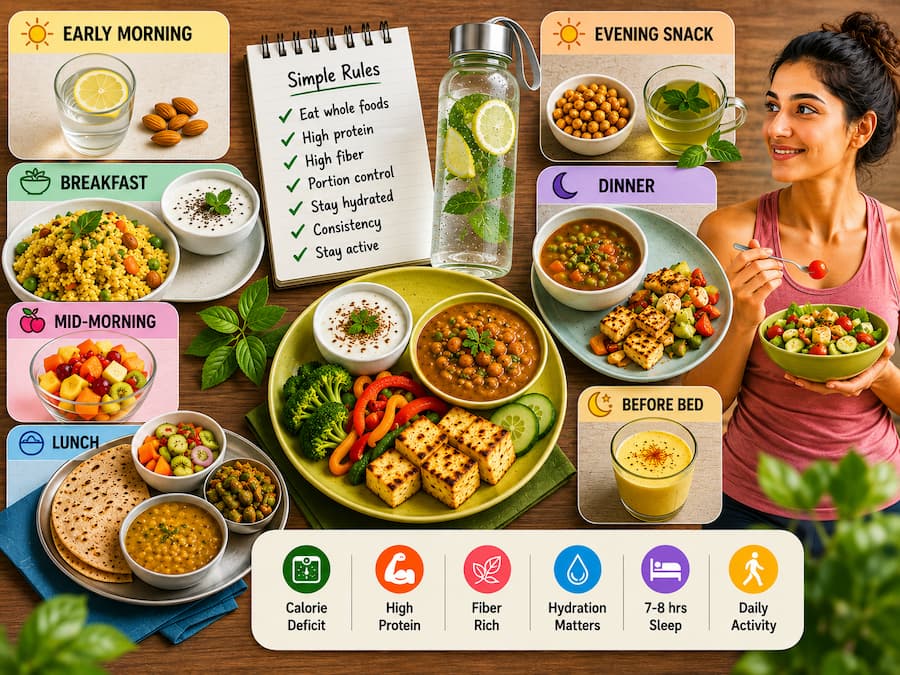
Free Non-Vegetarian Weight Loss Diet Plan (Approx. 1400–1600 Calories)
This sample plan is intended for general educational purposes and may not suit everyone.
Breakfast
- 2 boiled eggs or vegetable omelette
- 2 slices whole grain toast
- Unsweetened tea or coffee
Mid-Morning
- 1 apple, orange, or guava
Lunch
- Grilled chicken breast or chicken curry with controlled oil
- 2 rotis
- Mixed vegetable sabzi
- Salad
Evening Snack
- Roasted chana
- Buttermilk or green tea
Dinner
- Fish, chicken, or egg bhurji
- Stir-fried vegetables
- 1 roti or small serving of rice
This type of meal pattern focuses on satiety while maintaining reasonable calorie intake.
Higher Protein Non-Vegetarian Weight Loss Plan (Approx. 1700–1900 Calories)
People who are physically active or perform regular strength training often benefit from slightly higher protein intake.
Breakfast
- 3 egg omelette with vegetables
- Fruit
Mid-Morning
- Greek yogurt or curd
Lunch
- Chicken breast or fish
- Rice or rotis
- Vegetables
- Salad
Evening Snack
- Boiled eggs
- Fruit
Dinner
- Chicken, fish, or lean meat
- Vegetables
- Small serving of carbohydrates
Higher protein diets often feel easier to sustain because meals tend to be more filling.
The Foods That Quietly Cause Problems
Most people do not gain weight because of one chicken meal.
The larger issue is often the collection of foods surrounding it.
Examples include:
- Sugary beverages
- Frequent fried snacks
- Late-night takeaways
- Alcohol
- Oversized restaurant portions
- Packaged desserts
A grilled chicken meal can quickly stop looking like a weight loss meal when it arrives with fries, sugary drinks, and enough sauces to qualify as a separate food group.
Context matters.
Why Protein Alone Is Not Enough
One mistake many people make is focusing entirely on protein while ignoring everything else.
A balanced diet should also include:
- Vegetables
- Fiber-rich foods
- Fruits
- Healthy fats
- Adequate hydration
Protein helps with satiety, but overall nutrition still matters.
Weight loss becomes much easier when meals provide both fullness and nutritional value.
What Usually Happens Around Week Two
The first week of a diet is often powered by motivation.
The second week introduces reality.
Work becomes stressful.
Social events appear.
Someone orders biryani.
The refrigerator suddenly looks less exciting than it did on day one.
This is where flexibility becomes more important than perfection.
People who maintain progress long-term are often not the most disciplined. They are simply better at recovering from imperfect days without abandoning the entire plan.
What Actually Makes a Diet Sustainable?
The most effective weight loss plans are usually built around habits that can survive ordinary life.
That may include:
- Prioritizing protein at meals
- Managing portion sizes
- Walking regularly
- Sleeping consistently
- Eating more vegetables
- Reducing ultra-processed foods
- Staying hydrated
These habits may not look revolutionary online, but they tend to outperform extreme dieting over the long term.
Why One Diet Plan Cannot Fit Everyone
Two people can eat the same meals and experience different results.
Differences in:
- Body weight
- Activity levels
- Metabolism
- Medical conditions
- Lifestyle demands
- Food preferences
all influence outcomes.
This is why personalized nutrition is becoming increasingly important in modern weight management.
HealthyHold Take
A good non-vegetarian weight loss diet should make life easier, not harder.
The goal is not to survive on bland food or eliminate entire food groups. The goal is to create a sustainable calorie deficit using satisfying meals, adequate protein, balanced nutrition, and realistic habits.
Because the best diet is rarely the one that works for seven days. It is the one that still works seven weeks later.
Important Note
This article is intended for general health and wellness education only and should not be considered medical advice, diagnosis, or treatment. Calorie requirements and nutritional needs vary based on age, body composition, activity levels, medical conditions, and health goals. Consult a qualified healthcare professional or registered dietitian for personalized dietary guidance.