
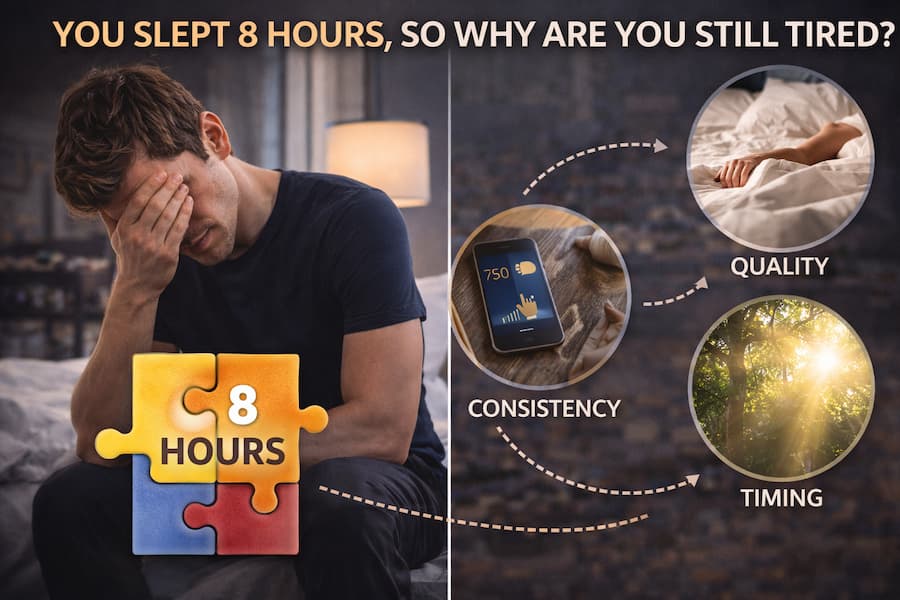
You did everything right. Slept for 7 to 8 hours, avoided alarms every 5 minutes, even tried to sleep early.
Yet you wake up feeling like your body just completed a night shift.
If this sounds familiar, the problem is not always sleep duration. It is sleep quality, timing, and what your body is dealing with underneath.
Let us break down why your 8 hours sometimes feel like 3.
Sleep Duration vs Sleep Quality
Not all sleep is equal.
Your body cycles through different sleep stages, including light sleep, deep sleep, and REM sleep. Deep sleep is when physical recovery happens. REM sleep supports mental recovery.
If these cycles are disrupted, you can sleep long and still wake up tired.
Research shows that fragmented sleep reduces recovery even if total sleep time looks adequate.
1. Poor Sleep Quality (The Silent Problem)
You may be spending enough time in bed but not enough time in deep sleep.
Common causes include:
- Frequent awakenings
- Noise or light exposure
- Late-night screen usage
Blue light exposure reduces melatonin production, delaying deep sleep onset.
2. Irregular Sleep Timing
Sleeping at different times every day confuses your circadian rhythm.
Your body prefers consistency. Even a shift of one to two hours can affect sleep efficiency and next-day energy levels.
Weekend sleep shifts are often the hidden culprit.
3. Sleep Debt (It Adds Up)
If you slept poorly for several days and then try to “fix it” with one good night, your body does not instantly recover.
Sleep debt accumulates and requires consistent recovery over multiple days.
4. Stress and Mental Load
Your body may be asleep, but your brain is still active.
Stress increases cortisol levels, which can disrupt sleep cycles and reduce deep sleep duration.
This leads to waking up mentally tired even after full sleep.
5. Poor Nutrition and Hydration
What you eat affects how you sleep.
- Heavy meals late at night disrupt digestion
- Low magnesium intake affects relaxation
- Dehydration impacts sleep quality
Even mild dehydration can increase fatigue the next day.
6. Lack of Physical Activity
Ironically, not moving enough can make you feel more tired.
Regular exercise improves sleep quality, especially deep sleep duration.
Sedentary lifestyles often lead to lighter, less restorative sleep.
7. Underlying Health Factors
Sometimes fatigue is not just lifestyle-related.
Conditions like anemia, thyroid imbalance, or sleep apnea can reduce sleep quality significantly.
If fatigue is persistent despite good habits, medical evaluation may be necessary.
Signs Your Sleep Is Not Restorative
- You wake up feeling heavy or groggy
- You rely heavily on caffeine to function
- You feel mentally foggy during the day
- You feel tired even after rest days
These are signals, not personality traits.
What Actually Helps (Practical Fixes)
Keep your sleep schedule consistent
Sleep and wake up at similar times daily, including weekends.
Reduce screen exposure before bed
Give your brain time to slow down. Even 30 to 60 minutes helps.
Improve your sleep environment
Keep your room dark, quiet, and slightly cool.
Move your body daily
Exercise improves sleep depth and recovery.
Watch your evening habits
Avoid heavy meals, caffeine, and excessive stimulation late at night.
Manage stress intentionally
Simple breathing, journaling, or quiet time can improve sleep quality significantly.
The Bottom Line
Sleeping 8 hours is important, but it is not the full story.
Quality, consistency, and lifestyle factors determine whether your sleep actually restores you.
If you wake up tired despite doing everything “right,” your body is not broken.
It is just asking for better recovery, not just more time in bed.