
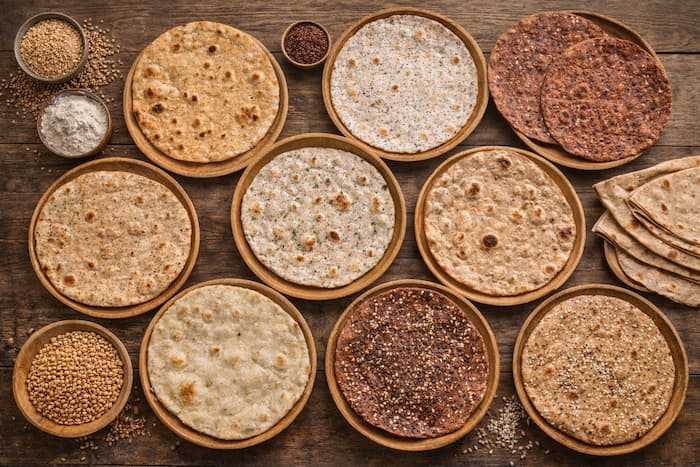
Roti has survived generations, diet trends, and endless food debates. Low carb came and went. Gluten-free caused panic. Keto confused everyone. And roti quietly stayed.
But here is the truth most people miss. Not all rotis are the same. The grain you choose can change how your body digests food, manages blood sugar, and even how full you feel after a meal.
Let us break down the most common types of roti, what research says about them, and who should actually be eating what.
1. Whole Wheat Roti
This is the default roti in most Indian homes, and for good reason.
Whole wheat roti contains complex carbohydrates, moderate fiber, plant protein, and B vitamins. It provides steady energy and supports digestion when eaten in reasonable portions.
Best for:
- Most healthy adults
- Active individuals
- People without gluten sensitivity
How to get benefits: Pair it with protein and vegetables. Avoid oversized rotis that quietly double calorie intake.
2. Multigrain Roti
Multigrain roti usually combines wheat with grains like oats, barley, jowar, or ragi.
The benefit comes from nutrient diversity. Different grains bring different fibers, minerals, and phytochemicals.
Best for:
- People bored of plain wheat roti
- Those wanting better micronutrient coverage
How to get benefits: Ensure it is actually multigrain, not refined flour with added color and marketing.
3. Jowar Roti (Sorghum)
Jowar is naturally gluten-free and rich in fiber and antioxidants.
Research shows jowar has a lower glycemic impact compared to refined grains and supports gut health.
Best for:
- People with gluten sensitivity
- Those managing blood sugar
- Weight management focused diets
How to get benefits: Eat fresh and warm. Jowar hardens when cold, which reduces enjoyment and compliance.
4. Bajra Roti (Pearl Millet)
Bajra is dense, earthy, and extremely filling.
It is rich in iron, magnesium, and insoluble fiber, which supports digestion and satiety.
Best for:
- People with high physical activity
- Those needing better iron intake
- Cold climates and winters
How to get benefits: Pair with healthy fats or curd to improve mineral absorption.
5. Ragi Roti (Finger Millet)
Ragi is one of the richest plant sources of calcium.
It has a low glycemic index and is often recommended in diabetes-friendly diets when portions are controlled.
Best for:
- People with diabetes or prediabetes
- Women concerned about bone health
- Older adults
How to get benefits: Combine with protein. Ragi alone can feel heavy and slow digestion if eaten in excess.
6. Makka Roti (Maize)
Corn-based rotis are naturally gluten-free and rich in carbohydrates.
They provide quick energy but are lower in protein compared to other grains.
Best for:
- High-energy requirements
- Occasional variety
How to get benefits: Do not rely on makka roti as the sole grain. Balance with protein-rich meals.
7. Rice Roti
Rice rotis are common in South India and are easy to digest.
They are low in fiber and protein but gentle on the gut.
Best for:
- People with sensitive digestion
- Post-illness recovery
How to get benefits: Balance with vegetables, lentils, and protein to avoid blood sugar spikes.
8. Oats Roti
Oats are rich in beta-glucan fiber, which supports heart health and cholesterol control.
Oats rotis often help with fullness and appetite regulation.
Best for:
- People managing cholesterol
- Those aiming for better satiety
How to get benefits: Use whole oats flour, not instant oats powders with additives.
9. Barley Roti
Barley has one of the lowest glycemic responses among grains.
It supports gut health, cholesterol reduction, and blood sugar control.
Best for:
- Diabetes management
- Heart health focus
How to get benefits: Mix with wheat or other flours to improve texture and consistency.
10. Besan Roti (Chickpea Flour)
Besan is high in protein and fiber and naturally gluten-free.
It has a lower carbohydrate load compared to grain-based rotis.
Best for:
- People aiming for higher protein intake
- Gluten-free diets
How to get benefits: Cook thoroughly and combine with vegetables to improve digestion.
How to Choose the Right Roti
There is no universally best roti. The right choice depends on:
- Your digestion
- Blood sugar control
- Activity level
- Cultural preference
- Sustainability of diet
Rotating grains often provides better nutritional coverage than sticking to one type forever.
The Bottom Line
Roti is not the problem. Mindless portions and poor pairing are.
Choosing the right roti, eating it in reasonable quantities, and combining it with protein, fiber, and fats makes it a powerful, sustainable food.
Your body does not need trends. It needs understanding.