
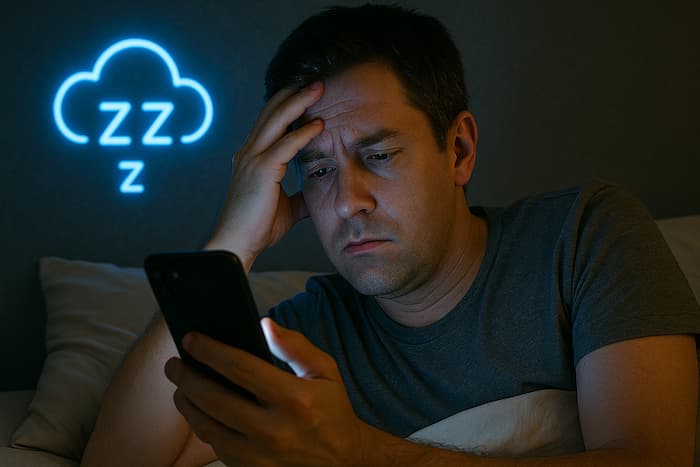
Let’s be honest: most of us go to bed like this, one pillow, one blanket, and one glowing rectangle that we swear we will put down after “just one more reel.” Spoiler alert: that reel turns into 47 reels, 12 memes, 3 random Google searches, and suddenly it is 2:13 AM and your alarm is basically laughing at you.
But here is the twist: it is not just you ruining your sleep. Your screen is actively hijacking it.
Yes, that innocent-looking device is essentially saying, “Sleep? Sorry. I don’t do that.” And your brain just gets dragged into the chaos.
Here is how screen time turns your nights into a sleep disaster and why putting your phone away before bed might be the healthiest breakup you ever have.
First, what exactly is screen time doing to your brain?
1. Blue light equals the new caffeine
Your phone emits blue light, which tells your brain, “It is daytime.” This light blocks melatonin, the hormone responsible for making you sleepy.
Result: your brain goes from “Let’s sleep” to “Let’s check Instagram for no reason.”
Blue light equals less melatonin. Less melatonin equals poor sleep. Poor sleep equals morning regret and too much chai.
2. How this late-night scrolling affects your whole body
a. Messes with your body clock
Your body runs on a natural system called the circadian rhythm. Screens confuse this clock so much that it forgets what time it is.
b. Increases stress hormones
Scrolling before bed, whether news, emails, or social media, can spike cortisol. High cortisol at night leads to racing thoughts, anxiety, restless sleep, and late-night overthinking.
c. Reduces deep sleep and REM sleep
Your phone is not just delaying sleep; it reduces sleep quality. You may sleep seven hours, but if deep sleep is low, fatigue and irritability follow.
d. Affects eyesight and causes headaches
Eye strain, dry eyes, and tension headaches are common signs that your body wants rest while you keep scrolling.
3. Why you must avoid screens before bedtime
a. Your brain needs a cool-down period
Just like your body after a workout, your brain needs time to unwind. Screens overstimulate it.
b. You fall asleep faster
Putting the phone away 30 to 60 minutes before bed can help you fall asleep without struggling.
c. Better hormones equals better sleep
Without blue light, melatonin rises properly, supporting deeper sleep, better recovery, and a healthier metabolism.
d. Better mental health
Less FOMO, less doom-scrolling, and fewer distractions before bed lead to a calmer mind and easier mornings.
4. What to do instead? (HealthyHold tips)
- Keep the phone out of bed. Your bed is for sleep.
- Use a digital sunset routine: one hour screen-free before sleep.
- Replace scrolling with reading, light stretching, calm music, or planning the next day.
- Use blue-light filters in the evening. They help but are not a replacement for putting the phone down.
Your phone will survive without you for one hour before sleep. But your mind, hormones, and sleep quality will benefit. Put the phone down. Close your eyes. Let your body do what it is designed to do: recover, reset, and rise stronger tomorrow.