
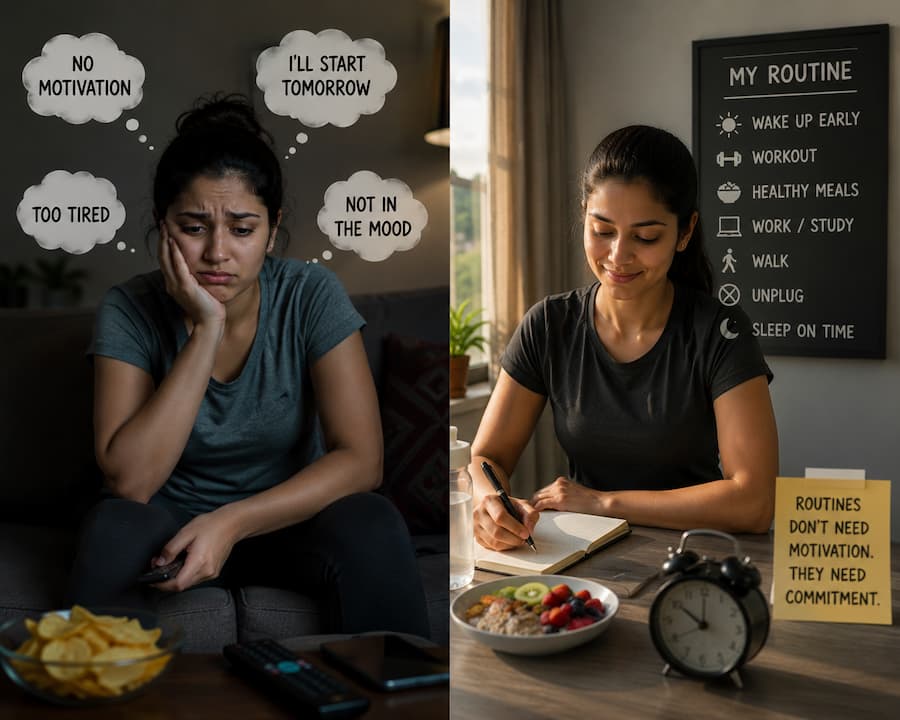
Motivation has excellent marketing.
It arrives dramatically. It makes people buy new shoes. It convinces someone at 11:47 PM that tomorrow morning will definitely begin with a sunrise workout, green smoothie, meditation session, and emotional transformation.
Then tomorrow arrives.
The alarm rings. The bed suddenly becomes spiritually important. And motivation quietly disappears without leaving a forwarding address.
This cycle is extremely common.
People often believe they fail fitness because they are not motivated enough.
But sustainable health rarely depends on feeling inspired every single day. It depends far more on routines, systems, habits, and consistency.
Motivation Is Emotional. Routine Is Structural.
Motivation is usually temporary.
It changes based on:
- mood
- sleep
- stress
- energy
- weather
- workload
- emotions
Some days motivation feels effortless. Other days even opening a fitness app feels like a major negotiation with the universe.
Routine works differently.
Routines reduce decision-making.
Instead of constantly asking: “Should I work out today?”
a routine quietly turns exercise into something more automatic.
Behavior research consistently shows that habits become easier when actions are repeated regularly in stable contexts.
Why People Rely Too Much on Motivation
Social media often glorifies intense motivation.
Transformation videos usually show:
- dramatic music
- perfect discipline
- nonstop intensity
- extreme routines
What rarely gets shown is:
- ordinary consistency
- missed workouts
- gradual progress
- habit building
- realistic routines
But long-term fitness is usually built through repeated ordinary actions.
Not daily emotional intensity.
Routine Protects You on Low-Energy Days
The biggest advantage of routines is that they continue functioning even when motivation is low.
For example:
- brushing your teeth usually does not require deep inspiration
- commuting to work often becomes automatic
- checking your phone somehow happens with frightening efficiency
Repeated behaviors become mentally easier over time.
Fitness routines can work similarly.
A person with established habits is more likely to continue exercising even during stressful periods because the behavior already feels familiar.
Perfection Thinking Destroys Consistency
Many people unknowingly follow an all-or-nothing mindset.
Examples include:
- missing one workout and giving up entirely
- overeating once and deciding the diet is ruined
- skipping a week and assuming progress is lost
This mindset creates inconsistency.
Sustainable fitness usually comes from returning quickly after imperfect days instead of waiting for perfect motivation to return.
One missed workout rarely matters. Repeated quitting does.
Small Habits Often Beat Extreme Plans
People naturally search for dramatic transformations.
But research on behavior change repeatedly shows that smaller sustainable actions are easier to maintain long term.
Examples include:
- walking daily
- increasing protein intake
- sleeping earlier
- preparing meals ahead
- stretching consistently
- reducing sugary drinks
- exercising 30 minutes regularly
These habits may appear less exciting online.
But consistency compounds.
And unlike extreme plans, sustainable habits do not usually collapse after two exhausting weeks.
Environment Shapes Behavior More Than Willpower
One underrated factor in consistency is environment.
Human behavior is strongly influenced by surroundings.
Examples:
- visible snacks increase mindless eating
- prepared gym clothes reduce workout friction
- structured schedules improve routine adherence
- easy access to healthy food improves choices
Good systems reduce reliance on constant self-control.
Because relying entirely on willpower after poor sleep, work stress, and emotional exhaustion is not always realistic.
Identity Matters Too
Long-term habits often strengthen when behaviors become part of identity.
For example: Instead of saying: “I’m trying to work out.”
People begin thinking: “I’m someone who takes care of my health.”
This psychological shift can improve consistency because behaviors feel aligned with self-image.
Motivation Usually Appears After Action
One of the biggest misconceptions is waiting to feel motivated before starting.
In reality, action often creates motivation.
People frequently feel better:
- after beginning the workout
- after going for the walk
- after finishing the session
Starting is often the hardest part.
Momentum builds through action, not endless preparation.
Why Overcomplicated Plans Fail
Many fitness plans fail because they demand unrealistic levels of perfection.
Examples include:
- two-hour workouts daily
- highly restrictive diets
- complicated meal prep
- impossible schedules
- sudden lifestyle overhauls
These systems may work temporarily. But sustainability usually suffers.
Simple routines are often more repeatable. And repeatable systems create long-term results.
Consistency Looks Boring From the Outside
One hidden truth about successful fitness journeys:
They often look repetitive.
Most progress comes from:
- repeated workouts
- regular meals
- basic habits
- sleep consistency
- gradual improvement
Not constant dramatic breakthroughs.
The body responds extremely well to repeated healthy behaviors over time.
Restarts Are Normal
Almost everyone experiences:
- setbacks
- missed workouts
- stressful weeks
- motivation drops
- schedule disruptions
The difference is not perfection. It is recovery speed.
People who return quickly after setbacks often maintain progress better than people chasing perfect streaks.
HealthyHold Take
Motivation is helpful. But routines are usually what carry people through real life.
Sustainable fitness is rarely built through constant excitement. It is built through repeatable behaviors that continue even during stressful, imperfect, low-energy days.
The goal is not becoming someone who feels motivated every morning. The goal is becoming someone who can continue showing up consistently even when motivation temporarily disappears.
Because long-term health is usually shaped more by everyday habits than occasional bursts of inspiration.