
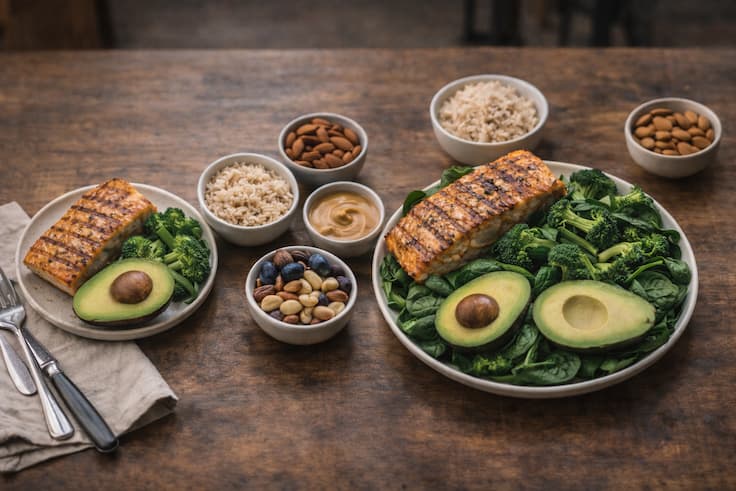
You switched to healthy food. The junk is gone. Labels look clean. Ingredients sound impressive. And yet, the scale refuses to cooperate.
This is where frustration usually starts. People assume something is wrong with their metabolism or that healthy eating somehow does not work for them.
In most cases, the issue is simpler and far less dramatic. Healthy food can still lead to weight gain when portions quietly exceed energy needs.
Healthy Does Not Mean Low-Calorie
Many nutritious foods are calorie-dense by nature. They contain healthy fats, complex carbohydrates, or concentrated energy. None of this is bad. But it does mean portion size matters.
Research consistently shows that total energy intake, not food labels, drives weight change over time.
Common Healthy Foods That Add Up Fast
Nuts and Nut Butters
Nuts are rich in healthy fats, protein, and micronutrients. They are also extremely energy-dense.
A small handful can easily cross two hundred calories. Peanut butter eaten straight from the jar rarely respects serving sizes.
Best approach: Use measured portions. Add nuts to meals, not as endless snacks.
Cooking Oils and Ghee
Healthy fats are essential, but they are also pure calories.
One tablespoon of oil or ghee provides around one hundred to one hundred twenty calories. Multiple pours during cooking turn simple meals into calorie-heavy ones.
Best approach: Use a spoon or spray instead of free-pouring. Track visually, not obsessively.
Smoothies and Liquid Calories
Smoothies feel light, but calories in liquid form are easy to overconsume.
Blended fruits, nut butters, seeds, milk, and sweeteners stack calories without triggering fullness signals effectively.
Best approach: Treat smoothies as meals, not drinks. Balance them with protein and fiber.
Dry Fruits
Dates, raisins, figs, and apricots are nutritious but concentrated.
Drying removes water, not calories. Portions that seem small often contain more energy than expected.
Best approach: Limit quantities and pair with protein to slow digestion.
Granola and Muesli
Marketed as healthy breakfast staples, many versions are calorie-dense and lightly disguised desserts.
Healthy ingredients do not cancel out high energy content.
Best approach: Read labels. Use small portions. Combine with high-protein foods like yogurt.
Avocado
Avocado provides healthy fats, fiber, and micronutrients.
It also delivers a significant calorie load. Multiple servings daily can push intake beyond needs.
Best approach: Enjoy it, but not automatically at every meal.
Whole Grain Breads and Rotis
Whole grains are better than refined ones, but quantity still matters.
Large portions of roti, bread, or rice add up quickly, especially when combined with calorie-dense sides.
Best approach: Focus on balance. Pair with protein and vegetables. Watch portion creep.
Why Portions Grow Without You Noticing
Portion sizes expand because habits change slowly.
Healthy food reduces guilt, which reduces restraint. Plates get fuller. Snacks get larger. Extra servings feel justified.
Research shows people consistently underestimate calorie intake, especially when food is perceived as healthy.
Weight Gain Is Not a Moral Failure
Weight change reflects energy balance over time. It does not judge food quality or effort.
Eating nutritious food improves health markers, digestion, and nutrient intake. It does not override basic energy laws.
This is not a failure of willpower. It is a mismatch between intake and expenditure.
How to Fix the Problem Without Obsession
1. Adjust Portions Before Cutting Foods
Reducing portions is usually more effective than eliminating foods entirely.
2. Prioritize Protein
Protein improves satiety and reduces unconscious overeating.
3. Eat Slower
Slower eating improves fullness signaling and reduces total intake.
4. Be Mindful of Liquid Calories
Drink calories intentionally, not casually.
5. Track Temporarily if Needed
Short-term tracking can recalibrate portion awareness without becoming permanent.
The Bottom Line
Healthy food supports health. It does not guarantee weight loss.
Portion size still matters. Energy still counts. And none of this makes healthy food bad.
When weight gain happens despite good intentions, the solution is usually adjustment, not restriction. Awareness beats elimination every time.