
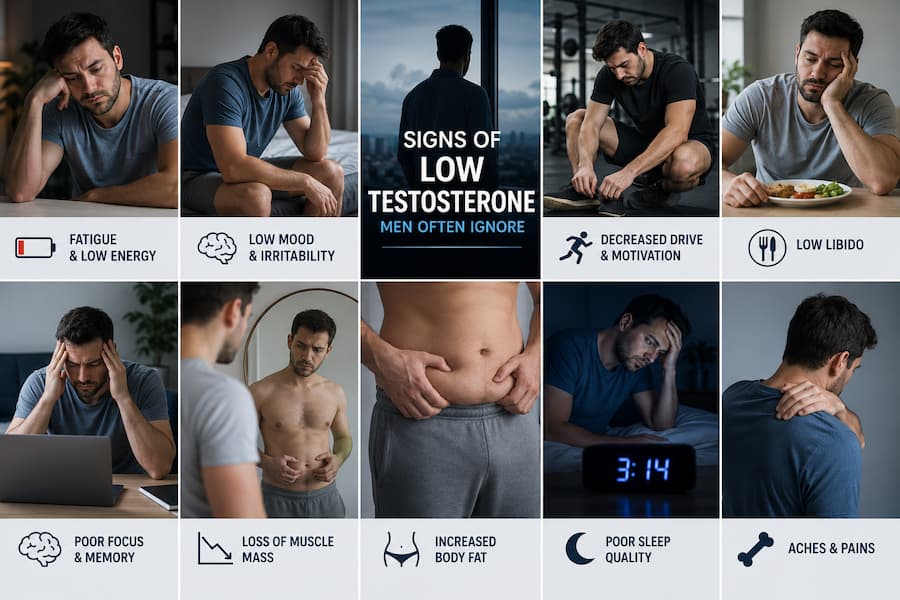
Most people expect hormonal issues to appear dramatically.
Something obvious. Something impossible to miss.
But in reality, low testosterone symptoms are often gradual, subtle, and easy to dismiss.
Many men simply assume they are:
- getting older
- stressed from work
- sleeping poorly
- mentally exhausted
- out of shape
- or ‘just tired lately’
And to be fair, sometimes those explanations are completely correct.
Because symptoms linked with testosterone can also overlap with:
- poor sleep
- chronic stress
- burnout
- depression
- inactivity
- obesity
- nutritional deficiencies
- medical conditions
This is why hormonal health should never be reduced to internet self-diagnosis.
Still, understanding commonly overlooked signs can help people recognize when lifestyle improvements or proper medical evaluation may be worth considering.
Testosterone Influences More Than Muscle
Testosterone is often simplified online into a ‘muscle-building hormone.’
In reality, testosterone is involved in several functions related to:
- energy
- recovery
- muscle maintenance
- mood
- bone health
- libido
- metabolic health
- cognitive well-being
Levels naturally vary between individuals and gradually change with age.
The important thing is understanding patterns, symptoms, and overall health context instead of obsessing over internet myths.
1. Persistent Fatigue That Does Not Improve Easily
One commonly discussed symptom is ongoing fatigue.
This is not just:
- feeling sleepy after a long day
- being tired after poor sleep
Instead, people may describe:
- low energy consistently
- reduced drive
- difficulty recovering
- feeling physically drained despite adequate rest
However, fatigue is also one of the most non-specific health symptoms.
Stress, sleep deprivation, nutritional issues, mental health conditions, and overwork can all produce similar experiences.
This is why proper evaluation matters.
2. Reduced Motivation or Drive
Some individuals report reduced motivation, confidence, or mental drive.
Again, this can overlap heavily with:
- stress
- anxiety
- depression
- burnout
- poor recovery
Hormonal health is deeply connected with broader lifestyle health.
The body rarely separates sleep, stress, nutrition, movement, and hormones into neat independent categories the way internet content sometimes does.
3. Difficulty Maintaining Muscle Mass
Testosterone plays a role in muscle maintenance and recovery.
Some people may notice:
- reduced strength progression
- slower recovery
- increased difficulty maintaining lean muscle
This becomes more noticeable when combined with:
- inactivity
- poor protein intake
- poor sleep
- aging
Exercise consistency and nutrition still remain extremely important factors.
No hormone exists independently from lifestyle habits.
4. Increased Body Fat Accumulation
Research suggests hormonal balance and body composition influence each other.
Some men may notice:
- increased abdominal fat
- reduced muscle definition
- lower physical performance
At the same time, excess body fat itself may also negatively influence hormonal regulation.
This creates a cycle where:
- reduced activity
- poor sleep
- weight gain
- lower recovery
- metabolic stress
all begin interacting together.
5. Reduced Recovery Capacity
Recovery matters more than many people realize.
Some individuals experiencing hormonal imbalance may report:
- prolonged soreness
- lower workout tolerance
- reduced exercise recovery
- persistent exhaustion after training
However, modern lifestyles alone can also heavily impair recovery.
Sleeping five hours, living on caffeine, and surviving entirely on stress is not exactly a recovery-enhancing strategy.
6. Changes in Sleep Quality
Hormonal health and sleep influence each other closely.
Poor sleep may affect testosterone production. Meanwhile, hormonal disruption may also affect sleep quality in some individuals.
This is one reason sleep is considered one of the foundational pillars of recovery and overall health.
7. Reduced Libido or Sexual Health Changes
Changes in libido are commonly associated with testosterone discussions.
However, sexual health is influenced by many factors including:
- stress
- sleep
- mental health
- cardiovascular health
- relationship dynamics
- medication use
- lifestyle habits
This is another reason simplistic internet advice can become misleading.
8. Mood and Irritability Changes
Some individuals report:
- lower mood
- irritability
- reduced emotional resilience
- mental fatigue
Again, these symptoms are highly non-specific.
Modern stress, burnout, poor sleep, and emotional overload can produce similar patterns even without hormonal abnormalities.
The Internet Often Creates Hormone Anxiety
One growing problem is excessive self-diagnosis.
Online content sometimes convinces perfectly healthy people that every normal bad day is evidence of hormonal collapse.
Feeling tired after:
- sleeping poorly
- overworking
- eating badly
- scrolling until 2 AM
is not automatically a sign of low testosterone.
Context matters.
Health should be evaluated through broader patterns, not isolated internet checklists.
Lifestyle Habits Still Matter Enormously
Research consistently shows that:
- sleep quality
- body composition
- exercise
- stress management
- recovery
- nutrition
all influence overall hormonal health.
Many people benefit significantly from improving foundational habits before chasing extreme ‘hormone optimization’ strategies online.
When Medical Evaluation May Be Important
Persistent symptoms that significantly affect:
- energy
- mood
- recovery
- physical performance
- sexual health
should be evaluated properly by a qualified healthcare professional.
Hormonal concerns require proper medical testing and interpretation.
Internet assumptions are not medical diagnosis.
HealthyHold Take
Hormonal health is complex and deeply connected with overall lifestyle patterns.
Low energy, poor recovery, reduced motivation, and body composition changes are not always caused by testosterone alone.
In many cases, modern stress, poor sleep, inactivity, inconsistent routines, and burnout play a major role.
Improving:
- recovery
- movement
- nutrition
- sleep quality
- stress management
can positively support overall health and well-being long before extreme solutions become necessary.
Because sustainable health is usually built through consistent lifestyle habits, not panic driven by internet algorithms.
Important Note
This article is intended for general health and wellness education only and should not be considered medical advice, diagnosis, or treatment. Symptoms related to hormonal health can overlap with multiple medical and psychological conditions. Consult a qualified healthcare professional for proper evaluation, testing, and diagnosis.