
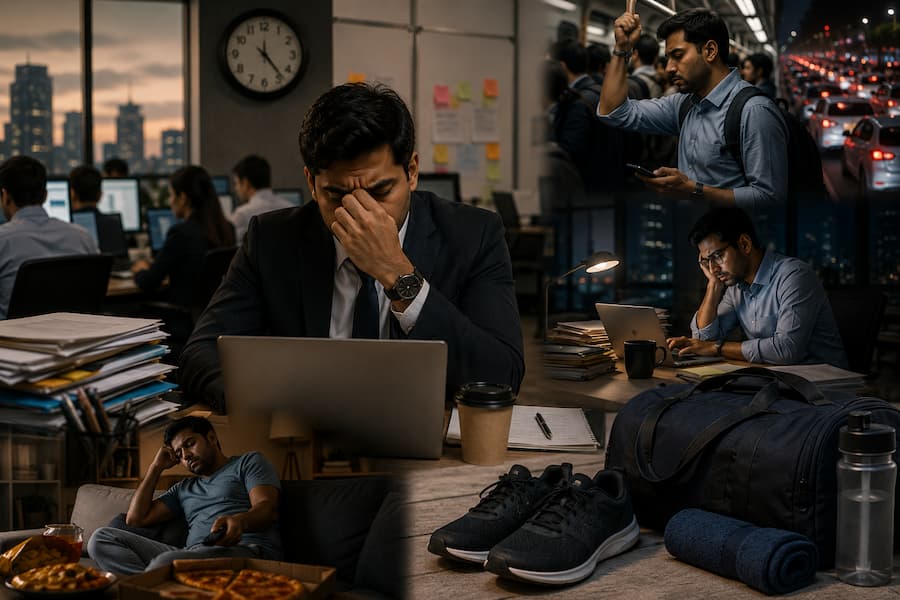
Most busy professionals do not wake up thinking:
“Today seems like a great day to completely ignore my health.”
In fact, many genuinely want to exercise consistently, eat better, sleep properly, and feel healthier.
The problem is what happens between:
- meetings
- deadlines
- commuting
- stress
- screen fatigue
- unpredictable schedules
- late-night work
- mental exhaustion
By the end of the day, even opening a workout app can feel emotionally ambitious.
This is one reason fitness consistency becomes difficult for many working professionals.
Not because they lack ambition. But because modern lifestyles create constant friction against healthy habits.
Time Is Not the Only Problem
People often say: “I don’t have time.”
But the issue is usually deeper than time alone.
Busy professionals often experience:
- decision fatigue
- mental exhaustion
- irregular schedules
- poor sleep
- stress-related eating
- inconsistent energy levels
A person may technically have 45 free minutes available.
But after an exhausting workday, motivation, focus, and physical energy may already feel depleted.
Sitting for Long Hours Changes the Body
Modern work environments involve prolonged sitting.
Extended sitting is associated with:
- stiffness
- reduced movement
- posture issues
- lower daily calorie expenditure
- muscular tightness
- reduced mobility
Common areas affected include:
- hips
- neck
- shoulders
- lower back
This is why many professionals feel physically tired despite not performing intense physical labor.
The body still experiences strain. Just differently.
Stress Quietly Affects Fitness Habits
Work stress influences:
- eating behavior
- sleep quality
- energy levels
- recovery
- cravings
- consistency
Many people under chronic stress experience stronger cravings for:
- sugary foods
- processed snacks
- comfort eating
- convenience meals
Stress can also reduce motivation for exercise because the brain prioritizes immediate comfort and recovery.
This explains why stressful periods often disrupt healthy routines.
Unrealistic Fitness Expectations Make Things Worse
One major problem is the belief that fitness only ‘counts’ if workouts are:
- intense
- long
- daily
- highly disciplined
This mindset creates unnecessary pressure.
Busy professionals often believe:
- 20 minutes is not enough
- missing one workout ruins progress
- fitness requires perfect meal prep
- healthy living must completely dominate life
In reality, sustainable health habits are usually built through realistic consistency.
Not perfection.
The All-or-Nothing Trap
Many professionals fall into a cycle like this:
Phase 1
Highly motivated. Aggressive workouts. Strict diet. Extreme planning.
Phase 2
Work stress increases. Schedule becomes chaotic. Energy drops.
Phase 3
Routine collapses completely.
This happens because the original system was too difficult to sustain.
A realistic plan that survives stressful weeks usually works better than a perfect plan that only works during calm weeks.
Sleep Becomes the First Casualty
Busy schedules often reduce sleep quality.
Late-night work, screen exposure, stress, and irregular routines can disrupt recovery.
Poor sleep affects:
- hunger hormones
- cravings
- workout performance
- decision-making
- recovery
- energy levels
This creates a difficult cycle:
- poor sleep increases fatigue
- fatigue reduces exercise consistency
- stress eating increases
- recovery worsens
Fitness becomes much harder when recovery is constantly compromised.
Convenience Often Wins Over Planning
When people are mentally exhausted, convenience becomes extremely powerful.
This affects:
- food choices
- movement habits
- workout consistency
- sleep routines
After a long workday, ordering food and watching one episode can quickly become ordering food and accidentally learning the entire backstory of a seven-season show at 1:30 AM.
Human behavior naturally shifts toward easier options during fatigue.
This is why reducing friction matters.
Simpler Systems Usually Work Better
Busy professionals often succeed more with:
- shorter workouts
- flexible meal structures
- realistic schedules
- home workouts
- walking routines
- habit tracking
- gradual progression
A sustainable routine should support real life.
Not require disappearing into a mountain monastery every Monday to recover mentally.
Consistency Is Usually More Important Than Intensity
Many people underestimate how powerful moderate consistent habits can become.
Examples include:
- walking daily
- strength training 3 times weekly
- improving protein intake
- sleeping earlier
- reducing liquid calories
- stretching regularly
Small repeated behaviors compound significantly over time.
The body responds surprisingly well to consistency.
Fitness Should Reduce Stress, Not Add More
Some people unintentionally turn fitness into another source of pressure.
This creates guilt around:
- missed workouts
- imperfect meals
- inconsistent schedules
Health routines should improve quality of life.
Sustainable systems allow flexibility during:
- stressful weeks
- travel
- deadlines
- social events
- low-energy days
Personalized Approaches Work Better for Busy Lifestyles
Generic fitness plans often fail because they ignore:
- work schedules
- commuting time
- energy patterns
- sleep habits
- stress levels
- personal preferences
A plan that works for a college athlete may not fit someone balancing:
- corporate meetings
- family responsibilities
- long commutes
- unpredictable schedules
Fitness becomes more sustainable when routines are adapted to lifestyle instead of constantly fighting against it.
Progress Does Not Need to Look Extreme
Social media often glorifies dramatic transformations.
But real sustainable fitness progress often looks quieter:
- improved energy
- better mobility
- stable routines
- healthier eating habits
- improved sleep
- gradual body composition changes
These changes may feel less dramatic. But they are often far more sustainable long term.
HealthyHold Take
Busy professionals do not usually fail fitness because they lack discipline. They struggle because modern lifestyles create constant pressure against consistency.
The solution is rarely extreme routines. It is building realistic systems that fit around work, stress, recovery, and everyday life.
A shorter sustainable workout routine you follow consistently will almost always outperform an unrealistic ‘perfect plan’ that collapses after two stressful weeks.
Because long-term health is usually built through repeatable habits that continue working even when life becomes busy and imperfect.