
Most people associate low energy with being busy.
So when someone feels:
- tired constantly
- mentally foggy
- low on motivation
- physically drained
- struggling with recovery
…the usual response is more caffeine.
Or motivational videos.
Or convincing themselves that sleeping five hours is somehow a personality trait.
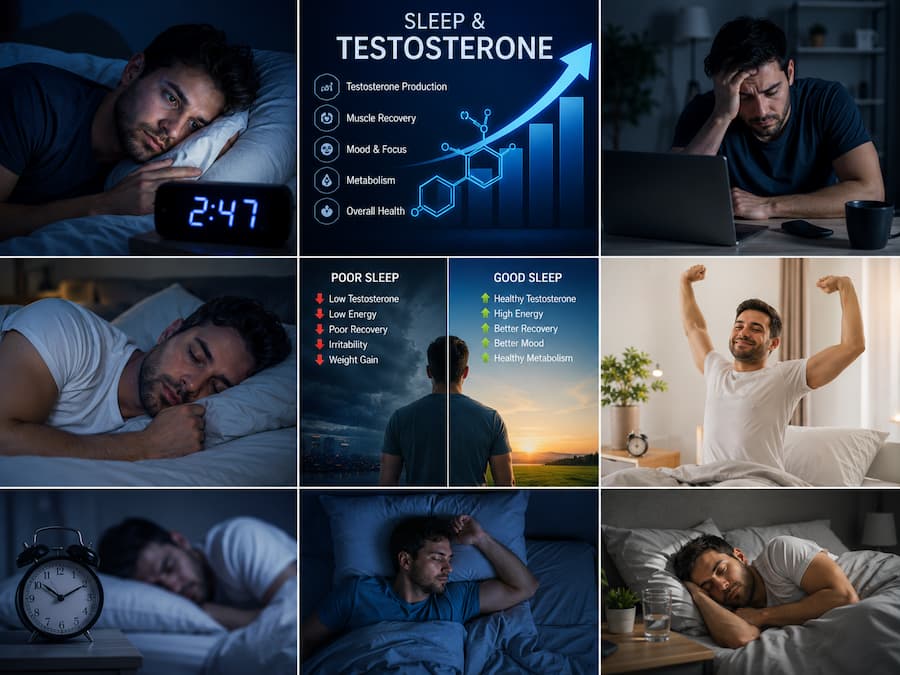
What often gets ignored is that sleep plays a major role in hormonal health, including testosterone production.
And modern lifestyles are becoming increasingly hostile toward quality sleep.
Testosterone Production Is Closely Linked to Sleep
Testosterone is produced through complex hormonal signaling involving the brain, endocrine system, and sleep cycles.
Research shows that a significant portion of daily testosterone production occurs during sleep, particularly during deeper sleep stages.
This means:
- poor sleep quality
- reduced sleep duration
- irregular sleep schedules
- fragmented sleep
may negatively influence testosterone levels over time.
The body performs many recovery and regulatory processes during sleep. Hormonal regulation is one of them.
Sleep Deprivation Affects More Than Just Energy
Chronic sleep restriction may influence:
- recovery
- mood
- cognitive performance
- metabolic health
- appetite regulation
- exercise performance
- hormonal balance
Many people focus heavily on training and nutrition while treating sleep like an optional side quest.
Unfortunately, the body treats it more like a core operating system requirement.
Modern Sleep Habits Are Getting Worse
Several modern habits quietly damage sleep quality:
- excessive screen exposure
- late-night scrolling
- irregular schedules
- work stress
- caffeine overuse
- late-night eating
- reduced physical activity
The brain was not designed to process endless notifications and blue-light exposure at midnight while simultaneously trying to enter deep restorative sleep.
Yet this has become surprisingly normal.
Deep Sleep Matters for Recovery
Sleep is not simply ‘inactive time.’
During sleep, the body supports:
- tissue repair
- muscle recovery
- nervous system regulation
- hormonal signaling
- memory processing
- metabolic recovery
Deep sleep stages are especially important for physical restoration.
Consistently poor sleep can gradually reduce recovery quality, even in people who exercise regularly.
Short Sleep Duration May Reduce Testosterone Levels
Research has shown associations between chronic sleep deprivation and reduced testosterone levels in healthy men.
Some studies observed noticeable hormonal changes after even one week of restricted sleep.
This does not mean one bad night destroys hormonal health.
The bigger issue is repeated long-term sleep disruption.
Consistently sleeping very little while expecting optimal recovery is biologically difficult.
The body eventually notices.
Usually aggressively.
Sleep Also Influences Hunger and Body Composition
Poor sleep may increase:
- hunger hormones
- cravings
- appetite for calorie-dense foods
- fatigue-related eating
At the same time, sleep deprivation often reduces:
- motivation to exercise
- recovery quality
- energy expenditure
This creates a cycle where:
- sleep worsens
- eating patterns worsen
- recovery worsens
- body composition worsens
- metabolic health declines
Hormonal health rarely exists in isolation. It is connected to broader lifestyle patterns.
Stress and Sleep Often Work Together
Stress and poor sleep frequently reinforce each other.
High stress may:
- increase nighttime alertness
- reduce sleep quality
- increase nighttime awakenings
- worsen recovery
Meanwhile, poor sleep can increase stress sensitivity the next day.
This creates a feedback loop many modern professionals unknowingly live inside for years.
Exercise Helps — But Recovery Still Matters
Regular exercise is associated with better:
- sleep quality
- metabolic health
- recovery
- overall well-being
However, excessive training combined with poor sleep may increase physical stress instead of supporting recovery.
Exercise and sleep work best together.
Not as enemies competing for your schedule.
Late-Night Screen Exposure Is a Real Problem
Phones, laptops, and televisions expose the eyes to bright light late at night.
This may influence melatonin production, the hormone involved in sleep timing regulation.
Late-night stimulation also keeps the brain mentally active.
Many people unknowingly spend the final hour before sleep:
- checking emails
- scrolling endlessly
- watching stressful content
- consuming excessive information
Then wonder why the brain suddenly refuses to power down peacefully.
Consistent Sleep Timing Matters Too
Sleep quality is influenced not only by duration but also by consistency.
Irregular schedules can disrupt circadian rhythms.
Frequently alternating between:
- very late nights
- inconsistent wake times
- sleep catch-up cycles
may negatively affect sleep quality and recovery.
The body generally functions better with predictable sleep-wake patterns.
Sleep Is One of the Most Underrated Recovery Tools
People often search for:
- expensive supplements
- advanced recovery hacks
- hormonal optimization tricks
while consistently ignoring one of the strongest recovery foundations available:
sleep.
Good sleep supports:
- energy
- recovery
- focus
- exercise performance
- stress regulation
- appetite control
- overall health
And unlike many internet ‘biohacks,’ sleep is backed by overwhelming scientific evidence.
Small Changes Can Improve Sleep Quality
Helpful sleep-supportive habits may include:
- reducing screen exposure before bed
- maintaining consistent sleep timing
- limiting excessive late caffeine
- improving evening routines
- keeping the room dark and cool
- increasing daytime movement
- reducing late heavy meals
The goal is not perfection. It is improving consistency and recovery quality gradually.
HealthyHold Take
Modern lifestyles often normalize chronic exhaustion, poor sleep, and nonstop stimulation.
But sleep is not laziness. It is one of the body’s most important recovery and regulatory systems.
Testosterone, energy, recovery, mood, metabolism, and physical performance are all closely connected to sleep quality over time.
For many people, improving sleep habits may support overall hormonal health far more effectively than constantly searching for quick fixes online.
Because sustainable health is usually built through recovery, consistency, and long-term lifestyle patterns.
Important Note
This article is intended for general health and wellness education only and should not be considered medical advice, diagnosis, or treatment. Sleep problems, fatigue, and hormonal concerns can have multiple causes. Consult a qualified healthcare professional for proper medical evaluation if symptoms persist.