
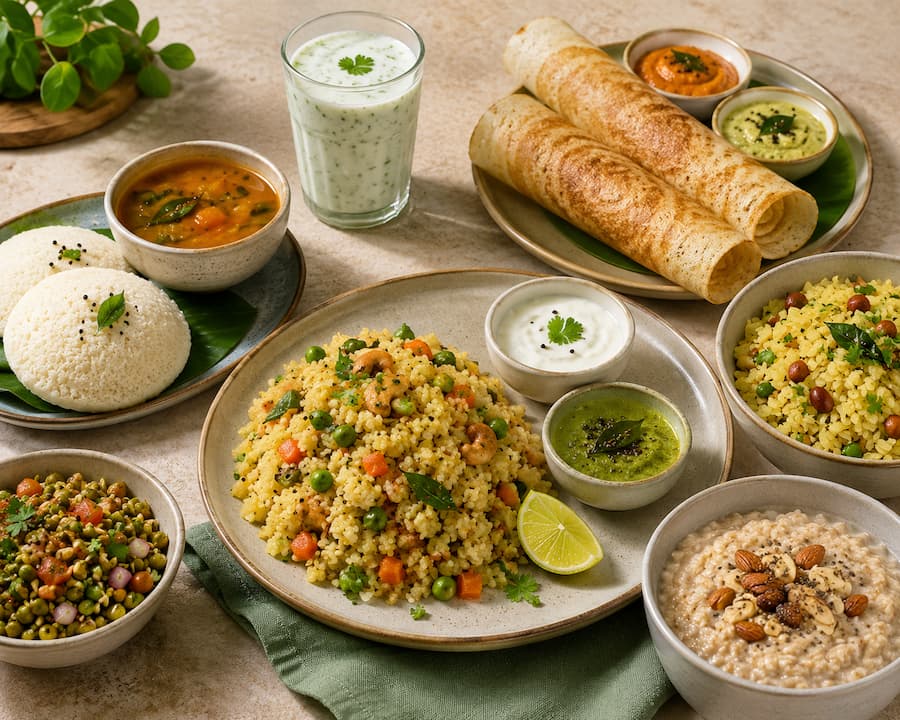
Breakfast advice online often swings between two extremes.
One side promotes ultra-restrictive “diet foods” that leave people hungry again before their first meeting of the day. The other side treats breakfast like a weekend buffet challenge involving fried snacks, sugary chai, and enough refined carbohydrates to trigger an afternoon energy crash before lunch.
Somewhere between those extremes is what most people actually need: balanced breakfasts that support satiety, energy, protein intake, and long-term consistency.
And contrary to what internet diet culture occasionally suggests, Indian breakfasts can absolutely support healthy weight loss.
The issue is usually not Indian food itself.
It is portion size, protein balance, excessive oil, refined carbohydrates, sugary beverages, and modern sedentary lifestyles layered on top of it.
What Makes a Breakfast Good for Weight Loss?
A useful weight loss breakfast generally helps with three things:
- Fullness
- Stable energy
- Reduced overeating later in the day
Meals that digest too quickly often leave people hungry again within hours.
That usually increases:
- Snacking
- Sugar cravings
- Late-morning hunger
- Energy crashes
Balanced breakfasts tend to include a combination of:
- Protein
- Fiber
- Moderate healthy fats
- Complex carbohydrates
This combination often supports better satiety compared to highly refined, low-protein meals.
Why Protein Matters More Than People Realize
A lot of Indian breakfasts are heavily carbohydrate-focused.
There is nothing inherently wrong with carbohydrates, but low-protein breakfasts may leave people hungry much faster.
Protein may help:
- Improve satiety
- Reduce cravings
- Support muscle maintenance
- Improve recovery
- Stabilize energy levels
This is one reason balanced breakfasts often feel more satisfying for longer.
Some of the Best Indian Breakfast Options for Weight Loss
The best breakfast is not necessarily the trendiest one.
It is usually the one that is practical, satisfying, nutritionally balanced, and sustainable enough to repeat consistently.
Vegetable Poha With Added Protein
Poha becomes far more balanced when paired with:
- Paneer
- Eggs
- Sprouts
- Peanuts
- Curd
The issue with poha is rarely poha itself.
It is when the meal becomes mostly refined carbohydrates with very little protein or fiber.
Adding vegetables and protein changes the satiety profile significantly.
Moong Dal Chilla
Moong dal chilla works well because it naturally combines:
- Protein
- Fiber
- Moderate carbohydrates
Adding paneer or curd on the side can make the meal even more filling.
It also tends to create fewer post-breakfast energy crashes compared to heavily refined breakfast foods.
Idli With Sambar
Idli often gets unfairly criticized in weight loss discussions.
The bigger issue is usually portion size and what accompanies it.
Pairing idli with protein-rich sambar and balanced portions may create a relatively light yet satisfying breakfast.
Sambar also contributes fiber and vegetables, which help improve fullness.
Vegetable Upma
Upma can work well when it includes:
- Plenty of vegetables
- Controlled oil quantity
- Balanced portions
- Protein on the side
Without those adjustments, it can become easy to overeat because semolina-based meals digest relatively quickly for some people.
Again, balance matters more than demonizing individual foods.
Eggs With Indian-Style Sides
Eggs are highly practical for many people trying to improve satiety.
Pairing eggs with:
- Roti
- Vegetable bhurji
- Sauteed vegetables
- Curd
- Fruit
can create a far more balanced breakfast than sugary cereals or bakery foods that disappear from the stomach emotionally and nutritionally within forty minutes.
Paneer-Based Breakfasts
Paneer works well in Indian breakfast patterns because it supports protein intake while fitting naturally into familiar meals.
Examples include:
- Paneer paratha with controlled oil
- Paneer bhurji
- Paneer-stuffed chilla
- Paneer toast on whole grain bread
The goal is not avoiding enjoyable foods.
The goal is improving meal composition.
Why Chai and Sugary Drinks Quietly Matter
A lot of breakfast calories come from beverages people barely mentally register.
Examples include:
- Sugary chai multiple times daily
- Sweet coffee drinks
- Packaged juices
- Flavored milk beverages
Liquid calories often contribute less fullness than solid food.
This makes them surprisingly easy to overconsume.
Reducing sugar quantity gradually may help without making breakfast feel unnecessarily restrictive.
The Real Problem Is Often Modern Lifestyle Patterns
Many breakfast problems are actually schedule problems.
People often:
- Skip breakfast completely
- Eat too quickly
- Rely heavily on packaged foods
- Grab fried snacks during commutes
- Overeat at night because mornings lacked proper nutrition
Weight loss struggles are rarely caused by one meal alone.
The overall lifestyle pattern matters more.
What Usually Works Better Long-Term
Sustainable weight loss breakfasts are usually:
- Filling enough to reduce cravings
- Realistic for busy mornings
- Balanced in protein and fiber
- Easy to repeat consistently
- Compatible with cultural eating habits
This is why extremely restrictive “diet breakfasts” often fail.
People do not maintain meals they secretly hate.
And the body tends to notice that eventually.
HealthyHold Take
The best Indian breakfast for weight loss is rarely the most extreme or trendy option.
Balanced meals with adequate protein, fiber, moderate portions, and realistic consistency usually work far better than aggressively restrictive breakfast rules.
Indian foods can absolutely support healthy fat loss when meal composition, portion balance, and lifestyle habits improve alongside them.
Important Note
This article is intended for general health and wellness education only and should not be considered medical advice, diagnosis, or treatment. Nutritional needs vary depending on medical history, activity levels, medications, and metabolic health. Consult a qualified healthcare professional or registered dietitian for personalized dietary guidance.