
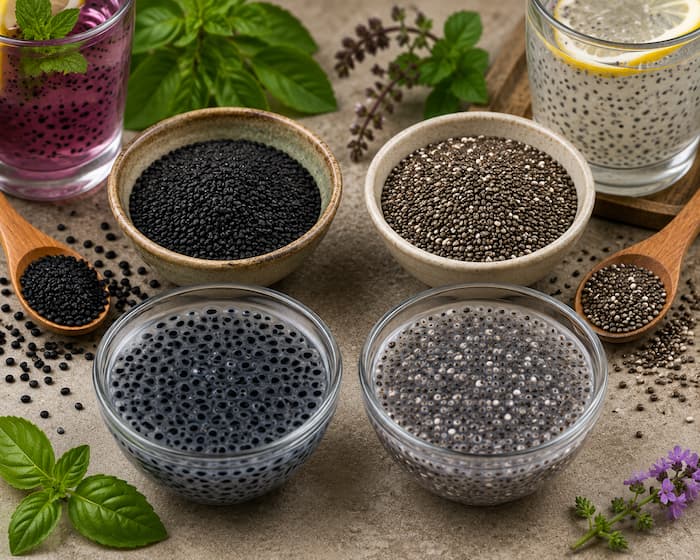
Few foods create as much confusion online as sabja seeds and chia seeds.
Someone adds them to lemonade. Someone else puts them in smoothies. A third person suddenly claims they are identical superfoods capable of solving modern civilization.
Meanwhile, most people are still searching one basic question:
What is sabja seed called in English?
Sabja seeds are commonly called basil seeds in English.
They come from the sweet basil plant, which is different from the chia plant.
Although sabja and chia seeds look somewhat similar after soaking, they are not the same food.
And once you place them side by side, the differences become surprisingly obvious.
Why Sabja Seeds Became So Popular Again
Sabja seeds have existed in traditional Indian and Southeast Asian food culture for generations.
They are commonly added to:
- summer drinks
- falooda
- sherbets
- cooling beverages
- light desserts
What changed recently is wellness marketing.
As interest in:
- hydration
- gut health
- fiber-rich foods
- lighter eating patterns
started growing online, basil seeds quietly entered the modern wellness conversation.
And unlike many internet trends, sabja seeds were already sitting in traditional kitchens long before expensive smoothie bowls arrived.
What Do Sabja Seeds Look Like?
Dry sabja seeds are tiny, black, and hard.
After soaking in water, they develop a soft gelatinous outer layer.
This gives them their distinctive texture in drinks and desserts.
One reason people confuse them with chia seeds is because both expand significantly after soaking.
But sabja seeds generally:
- swell faster
- develop a smoother coating
- have a slightly different texture
- remain darker in appearance
Sabja Seeds vs Chia Seeds: What Is the Difference?
This is one of the most searched questions online.
Although sabja and chia seeds are often grouped together, they differ in several ways.
Origin
- Sabja seeds come from sweet basil plants.
- Chia seeds come from the Salvia hispanica plant.
Soaking Time
- Sabja seeds absorb water quickly, often within minutes.
- Chia seeds usually require longer soaking.
Texture
- Sabja develops a softer outer gel.
- Chia seeds retain a slight crunch internally.
Usage
- Sabja is traditionally common in cooling drinks and desserts.
- Chia is frequently used in oats, puddings, smoothies, and modern health recipes.
Nutrition
Both contain fiber, but chia seeds generally contain higher omega-3 fat content.
Sabja seeds are often appreciated more for hydration support, texture, and traditional cooling use.
Why People Add Sabja Seeds to Summer Drinks
Sabja seeds are frequently associated with cooling beverages.
This likely relates partly to:
- hydration support
- water absorption
- traditional dietary practices during hot weather
When soaked, sabja seeds absorb water and create volume.
This can make drinks feel more refreshing and filling.
Especially during Indian summers, people often prefer lighter, hydrating foods and beverages that feel easier on the body.
Sabja Seeds and Digestion
Sabja seeds contain fiber, which plays an important role in digestive health.
Fiber may help support:
- bowel regularity
- fullness after meals
- gut health
- digestive comfort
Because sabja absorbs water, adequate hydration becomes important when consuming fiber-rich foods.
This is one reason soaked preparation matters.
Dry consumption without sufficient fluid is generally not ideal.
Why They Often Feel Filling
Foods that absorb water and increase volume may help improve satiety.
Sabja seeds expand noticeably after soaking, which may contribute to a greater feeling of fullness in beverages and meals.
That does not make them a miracle weight-loss ingredient.
But they can fit into balanced eating patterns that emphasize:
- hydration
- fiber intake
- mindful snacking
- lower reliance on heavily processed foods
The Problem With Turning Every Seed Into a ‘Superfood’
Modern nutrition trends often exaggerate foods dramatically.
At some point online, every seed apparently became capable of:
- detoxifying the body
- melting fat instantly
- fixing metabolism
- reversing time itself
Reality is usually less dramatic.
Sabja seeds can be a useful addition to balanced diets. But health outcomes still depend heavily on:
- overall dietary quality
- sleep
- movement
- stress management
- consistency
No single ingredient replaces lifestyle habits.
Simple Ways to Use Sabja Seeds
Sabja seeds are commonly added to:
- lemon water
- coconut water
- buttermilk
- falooda
- fruit drinks
- yogurt bowls
- smoothies
Their neutral taste makes them easy to combine with different flavors.
The soaking process is important because it improves texture and makes them easier to consume.
Why Traditional Foods Keep Returning to Modern Nutrition
One interesting pattern in wellness culture is the rediscovery of traditional foods.
Many older ingredients align surprisingly well with modern interest in:
- hydration
- minimally processed eating
- fiber-rich foods
- gut-friendly meals
- lighter snacking
Foods like:
- sabja
- sattu
- makhana
- ragi
- chaas
are gaining popularity again partly because they already fit many modern health preferences naturally.
Sometimes the future of nutrition quietly looks a lot like older kitchen habits.
HealthyHold Take
Sabja seeds, or basil seeds, are not identical to chia seeds, even though the internet frequently treats them like nutritional twins.
They differ in origin, texture, soaking behavior, and nutritional profile.
Still, sabja seeds can absolutely work well in balanced diets, especially in hydrating drinks and fiber-rich meals.
The biggest value often comes not from extreme health claims, but from how easily traditional foods like sabja fit into practical, everyday eating habits.
Because sustainable nutrition usually works best when healthy choices also feel familiar, enjoyable, and realistic to maintain.