
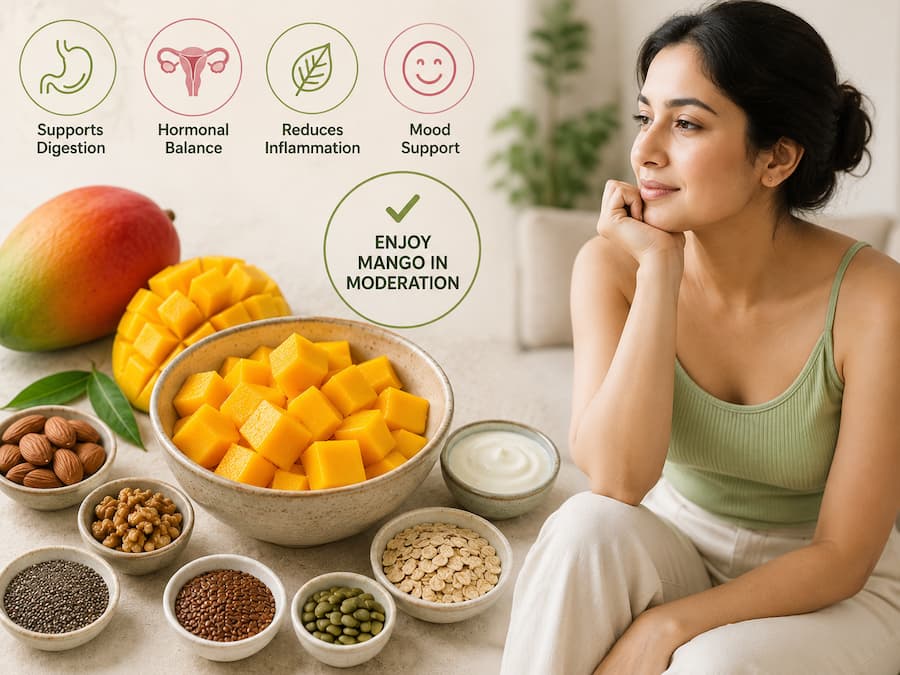
Mango is often misunderstood during PMS or in women with PCOD. Many believe its natural sweetness can worsen hormonal symptoms. However, scientific evidence shows that mango can be safely consumed and may even offer specific benefits when eaten in moderation and combined correctly.
This article explains when mango is helpful, when to limit it, and the physiological reasons behind these effects.
Mango and PMS
PMS involves inflammatory changes, fluctuations in estrogen and progesterone, and alterations in serotonin and blood sugar levels. Diet plays a significant role in managing these symptoms.
Why Mango Can Be Beneficial During PMS
1. Natural carbohydrate source
Mango provides natural sugars along with fiber, which helps maintain stable blood glucose. Stable blood sugar is associated with reduced irritability, fatigue, and cravings during PMS.
2. Rich in vitamin B6
Vitamin B6 contributes to serotonin synthesis. Higher serotonin levels may help reduce mood swings and irritability associated with PMS.
3. Contains anti-inflammatory polyphenols
Mango contains mangiferin and quercetin, which help reduce inflammation. PMS symptoms such as breast tenderness and abdominal discomfort are linked to inflammatory pathways.
4. High potassium content
Potassium helps reduce bloating and water retention, both common PMS symptoms.
When to Limit Mango During PMS
Excessive mango intake or combining it with heavy meals may cause temporary bloating in sensitive individuals. A serving of about one cup of sliced mango is generally well tolerated.
Mango and PCOD or PMOS
PCOD involves insulin resistance, chronic inflammation, and hormonal imbalance. Managing dietary sugars is important, but mango is not automatically harmful.
Why Mango Is Safe in PCOD When Eaten Correctly
1. Low to moderate glycemic load
Although mango tastes sweet, its glycemic load per serving is moderate when consumed with protein or fiber. Insulin resistance is influenced more by overall dietary patterns than by a single fruit.
2. Rich in soluble fiber
Mango contains pectin and other fibers that slow glucose absorption and support steadier insulin response.
3. Anti-inflammatory effects
Mangiferin in mango has been associated with reduced oxidative stress and inflammation, both closely linked with PCOD.
4. Supports gut health
Many women with PCOD experience gut dysbiosis. Mango acts as a natural prebiotic by feeding beneficial gut bacteria, which may support metabolic and hormonal health.
When to Limit Mango in PCOD
Women with severe insulin resistance may experience glucose spikes from very large servings. Oversized portions or pairing mango with refined carbohydrates should be avoided.
A serving of half to one cup at a time, paired with protein or healthy fats such as nuts, seeds, or yogurt, is generally more balanced.
How Mango Should Be Eaten for PMS and PCOD
- Eat mango in controlled portions.
- Combine mango with protein or healthy fats to stabilize glucose.
- Avoid pairing mango with refined carbohydrates or heavy meals.
- Consume mango as a snack rather than after a large meal.
- Prefer fresh mango over juices or concentrated forms.
Final Summary
You do not need to avoid mango if you have PMS, PCOD, or PMOS. The key is moderation and proper pairing. Mango contains fiber, antioxidants, vitamins, and polyphenols that may support hormonal balance, reduce inflammation, and improve gut and metabolic health.
Concerns generally arise only when mango is consumed in excessive amounts or combined with highly refined or heavy foods.
Important Note
This article is intended for general health and wellness education only and should not be considered medical advice, diagnosis, or treatment. Hormonal conditions such as PMS, PCOD, and PMOS vary between individuals. Consult a qualified healthcare professional or registered dietitian before making significant dietary or medical decisions.