
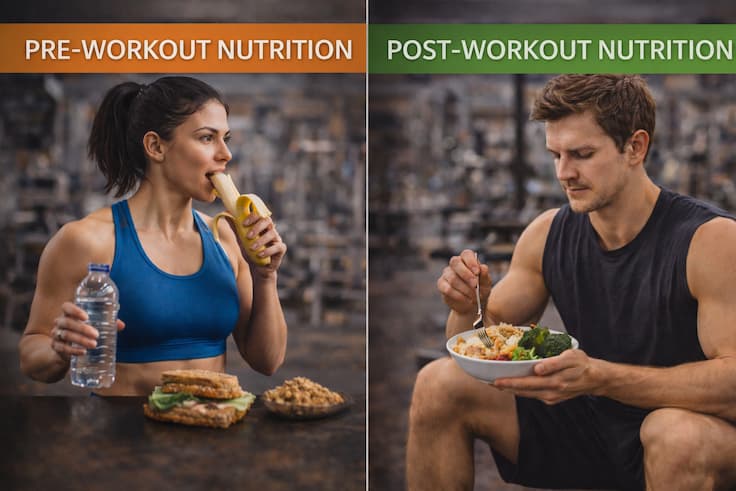
Pre-workout meals have been marketed like rocket fuel. Post-workout meals have been treated like emergency medicine. Miss one window and supposedly all progress disappears.
Reality is calmer. And far more forgiving.
Nutrition around workouts matters, but not in the dramatic, do-or-die way it is often presented. What matters most is total intake over the day, consistency across the week, and choosing foods that your body actually tolerates.
What Pre-Workout Nutrition Is Supposed to Do
The goal of eating before training is simple:
- Provide energy
- Reduce fatigue
- Support performance
It is not meant to magically increase strength or compensate for poor sleep, stress, or recovery.
Do You Need to Eat Before a Workout
Not always.
If you trained recently and ate within the last three to four hours, your body already has circulating energy and muscle glycogen available.
If you are training fasted and performance feels fine, that is acceptable for light to moderate sessions. If strength, endurance, or focus drops, fuel matters.
What to Eat Before a Workout
Research consistently shows carbohydrates improve performance in moderate to high-intensity training. Protein supports muscle preservation.
A practical pre-workout meal includes:
- Easily digestible carbohydrates
- Moderate protein
- Low fat and fiber close to training
Examples:
- Fruit with yogurt
- Roti with curd
- Oats with milk
- Banana with peanut butter in small quantity
Timing guideline:
- Large meal: 2 to 3 hours before
- Small snack: 30 to 60 minutes before
There is no performance bonus for eating closer if digestion is uncomfortable.
The Caffeine Question
Caffeine can improve performance, strength, and endurance.
Effective doses are much lower than most supplements suggest. One to two cups of coffee is enough for many people.
Caffeine late in the day can disrupt sleep, which harms recovery more than it helps performance.
What Post-Workout Nutrition Is Supposed to Do
Post-workout nutrition supports:
- Muscle protein synthesis
- Glycogen replenishment
- Recovery
It does not erase poor training or instantly build muscle.
The Myth of the Anabolic Window
The idea that you must eat within 30 minutes after training is outdated.
Research shows muscle protein synthesis remains elevated for many hours after training, especially when total daily protein intake is adequate.
If you eat a balanced meal within one to two hours post-training, you are doing just fine.
What to Eat After a Workout
A solid post-workout meal includes:
- Protein to support muscle repair
- Carbohydrates to replenish glycogen
- Fluids to rehydrate
Examples:
- Dal, rice, vegetables
- Eggs with roti
- Chicken or paneer with grains
- Curd-based meals
Protein guideline: About 20 to 40 grams per meal is sufficient for most adults, depending on body size.
Supplements Are Optional, Not Mandatory
Protein powders are convenient, not superior.
If whole food protein fits your schedule, digestion, and preferences, supplements are unnecessary.
Similarly, post-workout drinks and recovery blends do not outperform regular meals when total intake is adequate.
What Matters More Than Timing
Consistent patterns beat perfect timing.
Key priorities:
- Adequate total protein across the day
- Sufficient carbohydrates for training demands
- Regular meal timing
- Hydration
People who eat well overall rarely struggle because of one missed pre- or post-workout meal.
Special Situations
Early morning training: A small carbohydrate snack or liquid nutrition can help.
Long endurance sessions: Intra-workout fueling may be beneficial.
Fat loss phases: Protein intake becomes more important than precise timing.
The Bottom Line
Pre- and post-workout nutrition is not a performance ritual. It is basic fueling.
Eat enough. Eat regularly. Choose foods that digest well. Adjust based on how you feel and perform.
Your body responds to patterns, not panic.