
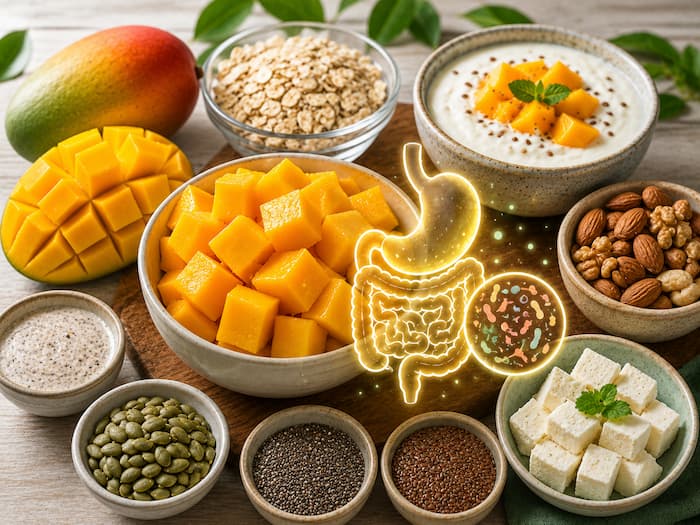
Mango is a fiber-rich, polyphenol-rich fruit with natural digestive enzymes that support overall gut function. When paired correctly with other foods, it can improve digestion, reduce bloating, and support a healthier microbiome.
This guide covers research-backed mango combinations that work well for digestive health.
1. Mango and Oats
A balanced, fiber-rich breakfast option.
Why it works
Oats contain beta-glucan, a soluble fiber that slows digestion. Mango provides natural enzymes that support carbohydrate breakdown.
Gut benefits
- Maintains stable blood sugar
- Supports bowel regularity
- Feeds beneficial gut microbes
- Reduces constipation
How to eat
- Overnight oats with mango
- Warm oats topped with mango
- Mango oat smoothie
2. Mango and Nuts
A stable combination for people who experience bloating after eating fruits alone.
Why it works
Nuts provide healthy fats and protein that stabilize digestion and reduce rapid fermentation in the gut.
Gut benefits
- Keeps you full longer
- Provides anti-inflammatory fats
- Improves nutrient absorption
How to eat
- Mango with almonds
- Mango with cashews
- Mango pistachio mix
3. Mango With Chia or Flax Seeds
A nutrient-dense, fiber-supported combination.
Why it works
Seeds provide soluble and insoluble fiber, while mango adds water and digestive enzymes that support bowel movement.
Gut benefits
- Relieves constipation
- Improves microbiome diversity
- Supports smoother digestion
How to eat
- Mango chia pudding
- Mango flaxseed smoothie
- Mango and chia bowl
4. Mango and Coconut Water
A light and hydrating combination.
Why it works
Coconut water provides electrolytes and potassium, while mango contributes digestive enzymes. Together, they help reduce dehydration-related bloating.
Gut benefits
- Reduces water retention
- Hydrates the digestive tract
- Gentle for sensitive stomachs
5. Mango and Paneer
Best for people needing stable blood sugar and digestive comfort.
Why it works
Mango contains natural sugars, while paneer provides protein that slows sugar absorption and reduces fermentation.
Gut benefits
- Reduces gas
- Improves glycemic stability
- Enhances digestion
How to eat
- Mango with paneer cubes
- Mango cottage cheese bowl
Combinations to Avoid
Mango with milk
This combination may feel heavy and can cause bloating or discomfort in people with sensitive digestion.
Mango after heavy meals
Mango digests faster than oily or heavy foods. Eating it after a large meal may increase gas, acidity, or bloating.
Mango with citrus fruits
This may increase acidity and irritate sensitive stomachs in some individuals.
Why Mango Supports Gut Health
- Mango contains natural amylase enzymes that help break down carbohydrates.
- It is rich in polyphenols like mangiferin, which support digestive health.
- Mango contains soluble and insoluble fiber that supports bowel movement and healthy gut bacteria.
- It acts as a natural prebiotic that feeds beneficial bacteria such as Bifidobacteria and Lactobacilli.
HealthyHold Mango Guidelines
- Eat mango alone or pair it with light proteins or healthy fats.
- Consume mango during mid-morning or early evening for easier digestion.
- Limit portions to about one cup of sliced mango at a time.
- Combine mango with hydration and fiber for smoother digestion.
Important Note
This article is intended for general health and wellness education only and should not be considered medical advice, diagnosis, or treatment. Individual digestive responses and medical conditions vary. If you have ongoing digestive symptoms, allergies, diabetes, PCOD, IBS, or any medical condition, consult a qualified healthcare professional before making major dietary changes.