
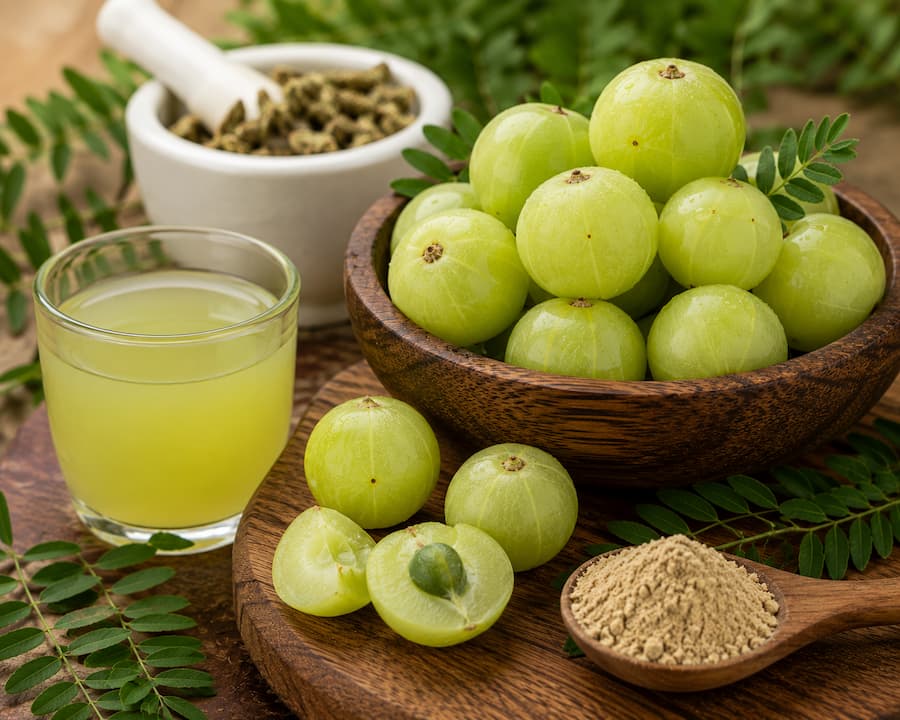
Amla is one of those foods people usually encounter in two situations.
Either:
- a grandparent insists it is good for health or
- a wellness influencer suddenly calls it an ancient superfruit discovered by modern science last Tuesday.
Meanwhile, most people are simply searching:
What is amla called in English?
Amla is commonly called Indian gooseberry in English.
It is a small green fruit known for its intensely sour, slightly bitter taste and long history in traditional Indian food practices.
For generations, amla has appeared in:
- pickles
- juices
- chutneys
- powders
- candies
- herbal preparations
- homemade remedies
Today, it is also appearing in:
- wellness drinks
- supplement marketing
- skin-care discussions
- immunity-focused content
- modern nutrition conversations
And unlike many internet wellness trends, amla actually has a long cultural history behind it.
Why Amla Gets So Much Attention
One major reason amla became popular globally is its vitamin C content.
Vitamin C plays roles in:
- immune function
- collagen production
- antioxidant activity
- skin health
- tissue repair
Amla also contains various plant compounds and polyphenols that researchers continue studying for their potential health-related properties.
That said, nutrition conversations online often become exaggerated very quickly.
Amla is nutritious. It is not magical.
Those are two very different things.
What Does Amla Taste Like?
The experience of eating raw amla is difficult to forget.
It is:
- intensely tart
- slightly bitter
- mildly astringent
- sharply sour
Then oddly refreshing afterward.
This unique flavor profile is one reason many people prefer amla in:
- juice form
- murabba
- dried preparations
- chutneys
- powders
- blended drinks
Raw amla definitely builds character.
Especially for first-time eaters who expected something closer to a grape and instead received a direct emotional conversation with acidity.
Why Amla Is Often Linked With Immunity Discussions
Because of its vitamin C content, amla is frequently associated with immune health.
Vitamin C supports several immune-related functions in the body.
However, one important distinction matters:
Supporting normal immune function is not the same as magically preventing illness.
Foods can contribute to overall health. But no single ingredient guarantees immunity perfection.
Balanced nutrition, sleep, stress management, movement, and recovery all matter significantly.
Amla and Skin Health Conversations
Amla frequently appears in discussions around:
- skin health
- collagen support
- hair care
- antioxidant intake
This partly relates to its vitamin C content, since vitamin C contributes to collagen formation.
Collagen plays an important role in skin structure.
Again, though, healthy skin is influenced by many factors including:
- sleep
- hydration
- nutrition
- sun exposure
- stress
- genetics
No fruit can fully negotiate with chronic sleep deprivation and three hours of nightly doom-scrolling.
Why Traditional Foods Are Returning to Wellness Culture
Foods like:
- amla
- makhana
- sattu
- ragi
- sabja
are gaining popularity again because modern consumers are increasingly interested in:
- minimally processed foods
- traditional eating patterns
- plant-based nutrition
- culturally rooted ingredients
- functional foods
Many traditional ingredients align naturally with modern wellness priorities without needing complete reinvention.
Sometimes wellness trends are simply old food habits returning with better photography.
Amla Juice Became Extremely Popular Online
Amla juice is now widely marketed for:
- detoxification
- metabolism
- glowing skin
- fat loss
- digestion
Some of these claims become exaggerated.
Research does suggest amla contains beneficial nutrients and antioxidant compounds.
But phrases like:
- “fat-melting drink”
- “miracle detox”
- “cleanses toxins instantly”
are usually marketing language rather than balanced nutritional science.
The body already contains highly advanced detoxification systems.
They are called the liver and kidneys.
Fresh vs Processed Amla Products
One important thing many people overlook is product quality.
Amla consumed as:
- fresh fruit
- minimally processed powder
- homemade preparations
is very different from heavily sweetened commercial products loaded with sugar.
Some packaged amla candies contain enough added sugar to quietly defeat the entire health conversation.
Preparation matters.
Can Amla Help During Weight-Management Phases?
No food directly causes weight loss by itself.
However, nutrient-dense foods like amla may fit well into balanced eating patterns because they can support:
- dietary variety
- fruit intake
- lower reliance on highly processed snacks
Sustainable weight management still depends primarily on:
- overall calorie balance
- movement
- sleep
- consistency
- long-term habits
Nutrition rarely works through one magical ingredient.
Why Amla Still Works in Modern Diets
One reason amla continues surviving nutrition trends is practicality.
It can fit into daily routines relatively easily through:
- juices
- chutneys
- smoothies
- powders
- infused drinks
- homemade recipes
It also carries strong cultural familiarity across many Indian households.
That familiarity often helps sustainable eating habits feel more realistic.
HealthyHold Take
Amla, or Indian gooseberry, became globally popular partly because modern wellness culture started rediscovering foods traditional eating systems already valued for generations.
Its vitamin C content, tart flavor, and versatility make it a useful addition to balanced diets.
But the real value of amla is probably not extreme health claims. It is how naturally it fits into practical everyday nutrition without requiring complicated wellness rituals.
Because sustainable health usually works best when nutritious foods are also culturally familiar, realistic, and easy to continue consistently over time.