
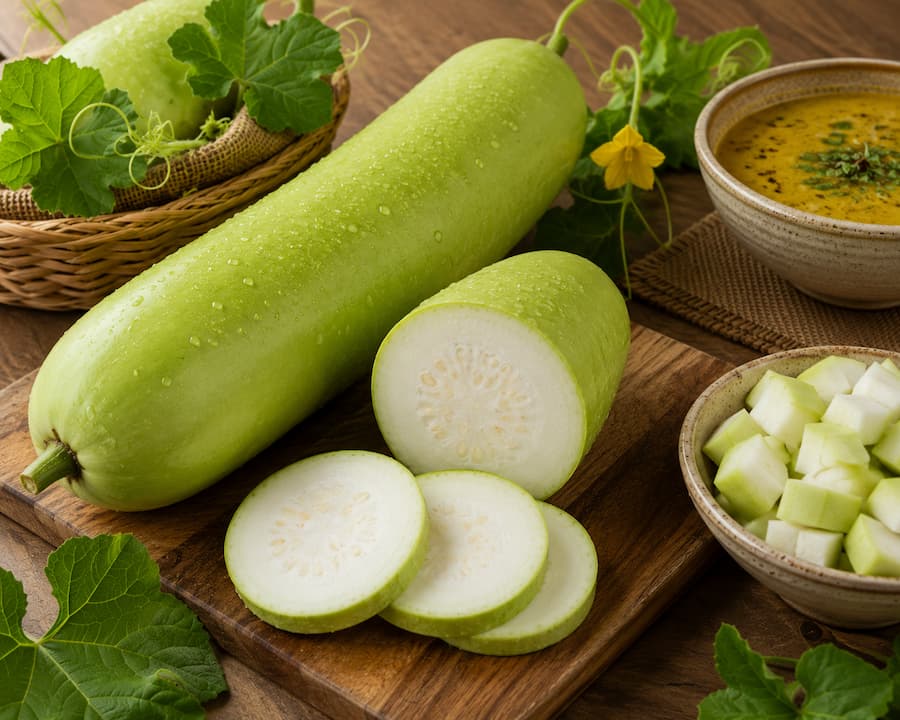
Lauki has experienced one of the most unexpected public image transformations in Indian food history.
For years, it was the vegetable many children tried to avoid politely.
Now suddenly:
- wellness influencers are blending it into juices
- diet plans mention it constantly
- fitness discussions treat it like a hydration expert
- and restaurants are quietly rebranding traditional vegetables with modern presentation and dramatically improved lighting
Meanwhile, many people are still searching a very basic question:
What is lauki called in English?
Lauki is commonly called bottle gourd in English.
In some regions, it is also referred to as:
- calabash
- white-flowered gourd
- long melon
It belongs to the gourd family and has been consumed in traditional Indian cooking for generations.
Why Bottle Gourd Suddenly Became Popular Again
Modern nutrition trends are increasingly moving toward:
- lighter meals
- minimally processed foods
- hydration-focused eating
- lower-calorie meal volume
- traditional ingredients
Bottle gourd fits naturally into that conversation.
It has a high water content and mild flavor, making it easy to include in:
- curries
- soups
- dals
- juices
- stuffed dishes
- lighter meals
Its simplicity is actually part of the appeal.
Not every healthy food needs to arrive with dramatic branding and twelve impossible-to-pronounce ingredients.
What Does Lauki Taste Like?
Bottle gourd has a soft, mild flavor.
On its own, it is relatively neutral.
This makes it highly adaptable because it absorbs surrounding flavors well.
When cooked properly with spices, herbs, lentils, or yogurt-based gravies, it becomes much more flavorful than its reputation suggests.
Its texture also becomes softer and easier to digest compared with many fibrous vegetables.
Why Lauki Is Often Associated With Light Eating
One reason bottle gourd appears frequently in wellness diets is because it is relatively low in calories while containing a large amount of water.
Foods with higher water content often create volume without becoming extremely calorie-dense.
This can help meals feel:
- lighter
- more filling
- easier during hot weather
- less heavy after eating
Again, this does not make lauki magical.
It simply means it can fit well into balanced meal structures.
Bottle Gourd and Hydration
Because bottle gourd contains substantial water content, it is commonly associated with hydration-focused meals.
Traditional food systems often favored water-rich vegetables during hotter seasons.
This is one reason lauki frequently appears in summer cooking patterns.
Modern wellness culture sometimes presents these foods like revolutionary discoveries.
Meanwhile, many Indian grandmothers are quietly wondering why everyone suddenly needs podcasts to explain lunch.
Why Lauki Often Appears in Weight-Loss Diets
Bottle gourd is frequently included in weight-management meal plans because it can increase meal volume without significantly increasing calorie density.
It also pairs well with:
- lentils
- curd
- lean proteins
- balanced Indian meals
The key point is balance.
Weight loss does not happen because one vegetable enters the diet dramatically.
Overall dietary patterns, movement, sleep, and consistency matter much more.
Still, vegetables like lauki can help support healthier meal quality and satiety.
The Lauki Juice Trend Needs Some Context
Lauki juice became extremely popular online for a period of time.
Some claims around it became highly exaggerated.
Research does suggest bottle gourd contains nutrients and hydration-supportive properties.
However, extreme claims such as:
- rapid detoxification
- instant fat burning
- miracle metabolic changes
are not scientifically supported.
Also importantly:
Bottle gourd should never taste bitter.
Bitter bottle gourd may contain toxic compounds and should not be consumed.
Fresh preparation and proper food safety matter.
Why Traditional Vegetables Are Returning to Modern Diets
One interesting nutrition trend is the return of simpler traditional foods.
People are increasingly looking for foods that are:
- practical
- affordable
- familiar
- minimally processed
- easier to cook regularly
Vegetables like:
- lauki
- tinda
- karela
- parwal
- pumpkin
are slowly reappearing in modern health conversations because they align naturally with balanced eating patterns.
Not because they are exotic. But because they are sustainable and realistic.
The Real Nutritional Value of Bottle Gourd
Bottle gourd contains:
- water
- fiber
- small amounts of vitamins and minerals
- low calorie density
Its biggest nutritional strength is probably not one single nutrient.
It is how easily it fits into balanced meals without making food feel excessively heavy.
This is especially useful in lifestyles where many people already consume:
- ultra-processed snacks
- oversized portions
- calorie-dense convenience foods
Sometimes nutrition improves simply by returning to simpler meal structures.
Healthy Eating Does Not Need to Be Dramatic
One refreshing thing about foods like lauki is that they quietly challenge the idea that healthy eating must always feel extreme.
No complicated wellness rituals. No imported powders. No motivational speeches from shirtless strangers near waterfalls.
Just a simple vegetable that has existed in kitchens for generations.
HealthyHold Take
Bottle gourd, or lauki, became popular again partly because modern lifestyles created demand for lighter, simpler, hydration-friendly foods that fit realistically into everyday meals.
It is not a miracle vegetable. But it can absolutely support balanced eating habits through its versatility, water content, and compatibility with traditional meal patterns.
Sometimes sustainable nutrition is not about discovering entirely new foods. It is about appreciating practical ingredients that already worked quietly for generations before wellness culture decided to rediscover them.