
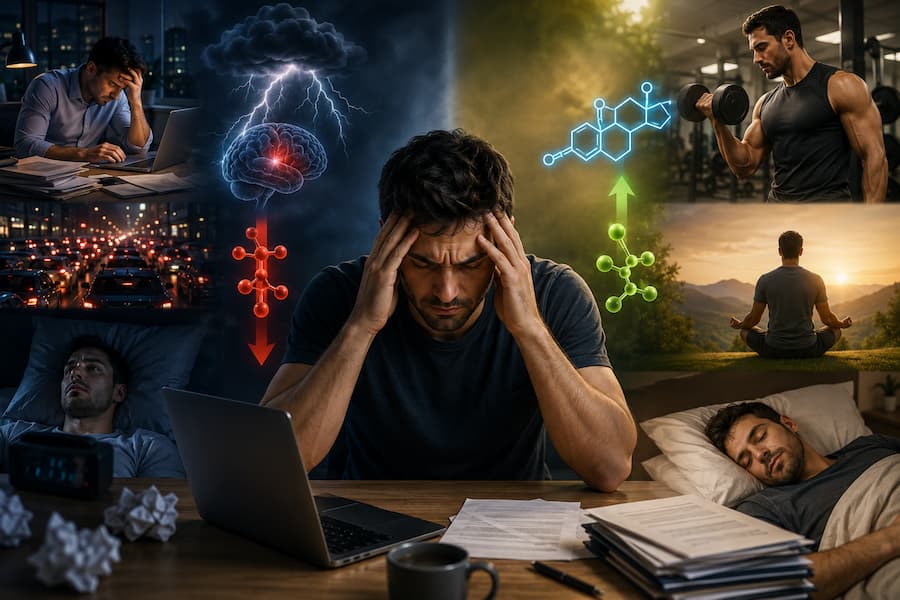
Modern stress has become strangely normalized.
People proudly announce things like:
- “I slept four hours.”
- “I’ve been stressed all week.”
- “I haven’t relaxed in months.”
as if the human nervous system is supposed to function like a permanently overheating laptop.
But chronic stress affects much more than mood.
Research suggests long-term stress may influence:
- sleep quality
- recovery
- appetite
- energy levels
- body composition
- hormonal health
including testosterone regulation.
This does not mean every stressful week suddenly destroys hormone levels.
The bigger concern is chronic, ongoing stress combined with poor recovery habits over time.
Stress Is a Biological Process, Not Just a Feeling
Stress is not only emotional.
When the body perceives stress, it activates complex physiological responses involving:
- the nervous system
- cortisol release
- adrenal signaling
- metabolic changes
- inflammatory responses
Short-term stress is not always harmful.
In fact, acute stress responses can help improve:
- alertness
- performance
- survival responses
The problem begins when stress becomes constant.
The body is not designed to remain in continuous high-alert mode indefinitely.
Cortisol and Testosterone Often Work in Opposite Directions
Cortisol is one of the body’s primary stress hormones.
Research suggests that chronically elevated cortisol levels may negatively influence testosterone production and recovery.
This relationship is complex, but long-term physiological stress may create an internal environment less supportive of optimal hormonal balance.
This is one reason recovery and stress management are considered important parts of overall health.
Modern Life Creates Constant Low-Level Stress
Many people are no longer facing occasional stress.
They are facing constant stimulation through:
- work pressure
- deadlines
- financial stress
- notifications
- excessive screen exposure
- poor work-life boundaries
- sleep disruption
- mental overload
The nervous system rarely gets genuine recovery time.
Even relaxation now often includes staring at another glowing screen while reading emails in bed.
Stress Often Damages Sleep Quality Too
One major way stress affects hormonal health is indirectly through sleep disruption.
Stress may contribute to:
- difficulty falling asleep
- nighttime awakenings
- shallow sleep
- poor recovery quality
Meanwhile, sleep plays an important role in hormonal regulation and testosterone production.
This creates a difficult cycle:
- stress worsens sleep
- poor sleep worsens recovery
- recovery worsens stress resilience
- energy and hormonal health may decline further
The body functions best when stress and recovery remain balanced.
Chronic Stress Can Influence Body Composition
Stress may also affect:
- appetite
- cravings
- eating behavior
- physical activity patterns
Many people under chronic stress experience:
- reduced exercise consistency
- emotional eating
- increased processed food intake
- lower motivation for movement
Over time, excess body fat and poor metabolic health may further influence hormonal balance.
Health systems are deeply interconnected.
The body does not separate stress, metabolism, sleep, and hormones into isolated departments.
Recovery Is Becoming a Lost Skill
Modern productivity culture often glorifies:
- overworking
- sleeping less
- nonstop hustle
- constant availability
But recovery is biologically necessary.
Exercise science, sleep research, and stress physiology consistently show that the body requires periods of restoration.
Without recovery, stress accumulates.
And unfortunately, caffeine can only negotiate with biology for so long.
Exercise Helps Manage Stress — When Balanced Properly
Regular exercise is associated with:
- improved stress regulation
- better mood
- improved metabolic health
- better sleep quality
- improved overall well-being
However, excessive training without recovery may increase physiological stress instead of reducing it.
Balance matters.
Sustainable fitness supports recovery. It should not become another source of chronic exhaustion.
Mental Stress Still Creates Physical Effects
One major misconception is believing psychological stress is somehow ‘less real’ physically.
In reality, chronic mental stress may still influence:
- heart rate
- blood pressure
- sleep
- appetite
- recovery
- inflammation
- hormonal signaling
The brain and body constantly communicate.
Mental overload eventually affects physical systems too.
Social Media Intensifies Stress More Than People Realize
Constant comparison online may increase:
- anxiety
- inadequacy
- pressure
- burnout
- unrealistic expectations
People are now comparing their:
- careers
- fitness
- appearance
- productivity
- lifestyles
to curated highlight reels all day long.
That level of constant comparison can quietly increase psychological stress over time.
Stress Management Does Not Need to Look Perfect
Stress reduction does not always require dramatic lifestyle changes.
Helpful habits may include:
- improving sleep consistency
- regular movement
- walking
- exercise
- mindfulness practices
- breathing exercises
- reducing excessive screen exposure
- improving work boundaries
- spending time outdoors
- social connection
Small consistent recovery habits often matter more than occasional extreme ‘wellness resets.’
Sustainable Health Requires Recovery
The body performs best when there is balance between:
- effort and recovery
- stress and restoration
- productivity and rest
Ignoring recovery while expecting peak performance indefinitely is biologically unrealistic.
Even high-performance athletes prioritize recovery because adaptation happens during restoration, not endless stress.
HealthyHold Take
Stress is not just an emotional experience. It creates real physiological effects that may influence sleep, recovery, energy, metabolism, and hormonal health over time.
Modern lifestyles often normalize chronic exhaustion and nonstop stimulation, but the body still requires recovery to function well.
Improving:
- sleep quality
- movement consistency
- stress management
- recovery habits
- work-life balance
may support overall hormonal health far more effectively than constantly searching for extreme shortcuts online.
Because sustainable health is usually built through balance, recovery, and long-term lifestyle patterns.
Important Note
This article is intended for general health and wellness education only and should not be considered medical advice, diagnosis, or treatment. Stress, fatigue, and hormonal symptoms can have multiple underlying causes. Consult a qualified healthcare professional for proper medical evaluation if symptoms persist.