
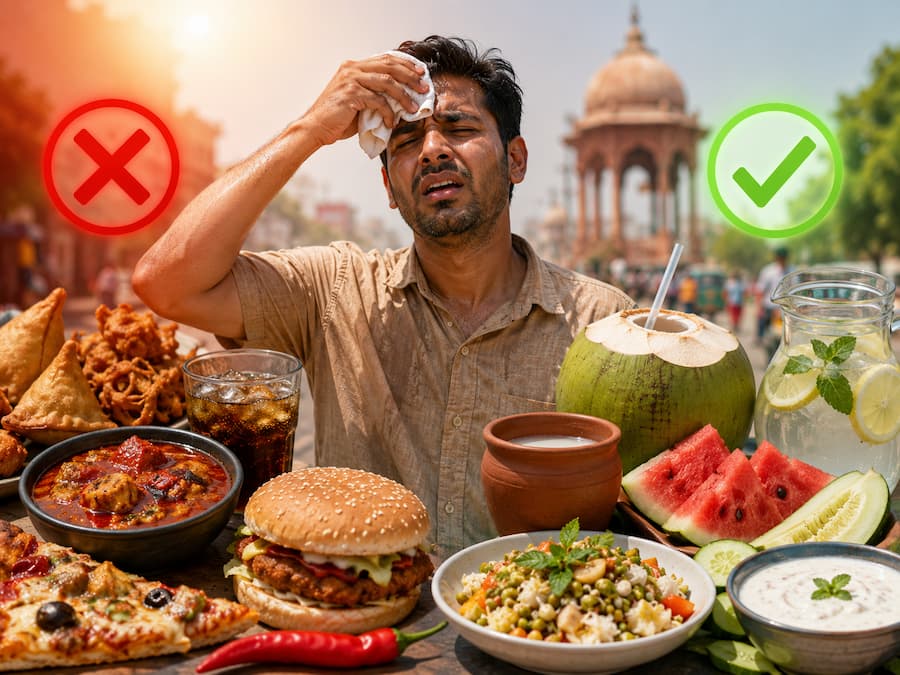
Extreme summer heat places additional stress on the body. Certain foods can increase internal heat production, worsen dehydration, and make it harder for the body to regulate temperature efficiently.
Understanding which foods to limit during hot weather can help reduce heat exhaustion and heat stroke risk, especially during peak Indian summers.
1. Very Spicy Foods
Spicy foods increase thermogenesis, which raises internal body temperature and may worsen dehydration.
Examples
- Red chilli-heavy curries
- Extra-spicy street food
- Spicy Indo-Chinese dishes
2. Deep-Fried and Oily Foods
Heavy oily meals slow digestion and increase metabolic heat production. High-fat foods also divert blood flow toward digestion instead of cooling.
Examples
- Pakoras
- Samosas
- Puris
- Bhature
- Fries
3. High-Sugar Foods and Sweets
Excess sugar increases metabolic load and may reduce proper thirst response, contributing to dehydration.
Examples
- Mithai
- Sweetened beverages
- Pastries
- Sugary breakfast cereals
4. Caffeinated Drinks
Caffeine can increase urine output and contribute to fluid loss in some individuals.
Examples
- Strong tea
- Coffee
- Energy drinks
5. Carbonated Soft Drinks
Soft drinks may create a temporary feeling of hydration but do not effectively restore electrolytes. Their high sugar content may worsen dehydration.
6. Processed and Packaged Foods
Highly processed foods are often high in sodium and preservatives, which increase water loss and place additional stress on the body during extreme heat.
Examples
- Chips
- Instant noodles
- Packaged snacks
7. Red Meat and Heavy Non-Vegetarian Meals
Large amounts of protein increase metabolic heat production during digestion.
Examples
- Mutton curry
- Heavy chicken biryani
- Kebabs
8. Excessive Pickles and Salty Fermented Foods
High sodium intake can worsen dehydration and increase heat retention.
Examples
- Achar
- Heavily salted snacks
- Very salty fermented foods
9. Alcohol
Alcohol contributes to dehydration and impairs the body’s temperature regulation mechanisms. Even small amounts can increase heat-related risks during very hot weather.
10. Extremely Hot Temperature Foods
Very hot soups, freshly fried foods, and boiling curries add additional thermal stress to the body.
HealthyHold Tip
During Indian summers, focus on minimizing foods that increase internal heat or dehydration.
Prioritize:
- Water-rich fruits
- Hydrating meals
- Natural electrolytes
- Coconut water
- Buttermilk
- Cooling food combinations
- Regular hydration throughout the day
Simple dietary adjustments can significantly improve comfort, hydration, and heat tolerance during extreme temperatures.
Important Note
This article is intended for general health and wellness education only and should not be considered medical advice, diagnosis, or treatment. Heat tolerance, hydration needs, and medical conditions vary between individuals. If you experience severe dehydration, dizziness, confusion, fainting, or symptoms of heat stroke, seek immediate medical attention.