
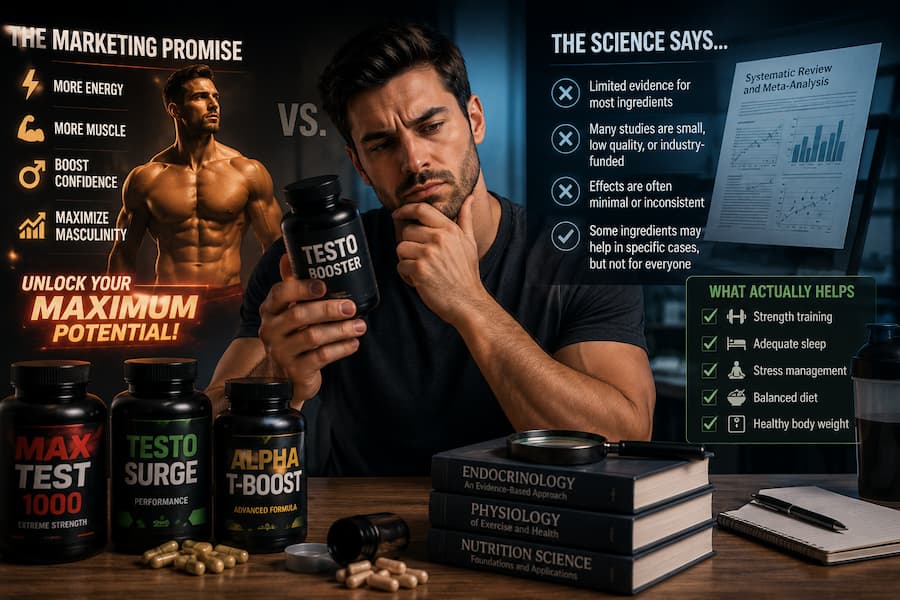
The internet has turned testosterone into a marketing industry.
Scroll long enough through fitness content and eventually someone will try to sell a capsule that promises:
- higher testosterone
- endless energy
- rapid muscle gain
- sharper focus
- improved confidence
- better recovery
- and possibly the ability to communicate directly with wolves
The problem is that marketing language often moves much faster than scientific evidence.
Testosterone boosters have become increasingly popular, especially among men dealing with:
- fatigue
- poor recovery
- low motivation
- stress
- body composition concerns
- declining exercise consistency
But many people are not asking the most important question:
Do these products actually work the way they are advertised?
The answer is complicated.
What Are Testosterone Boosters?
Testosterone boosters are supplements marketed to support or increase testosterone levels naturally.
These products often contain ingredients such as:
- ashwagandha
- fenugreek
- zinc
- magnesium
- vitamin D
- tribulus terrestris
- D-aspartic acid
- tongkat ali
Some products combine multiple ingredients into highly branded formulas with extremely dramatic names.
Because apparently no supplement company believes anyone would buy something called “Reasonably Balanced Hormonal Support.”
Marketing Often Exaggerates the Science
One of the biggest issues in the testosterone supplement industry is exaggerated interpretation of research.
A small improvement in one marker under very specific conditions often becomes transformed into:
“Scientifically proven testosterone explosion formula.”
In reality, evidence for many popular testosterone boosters remains:
- mixed
- limited
- inconsistent
- highly variable between individuals
Some ingredients show potential in specific contexts. Others have very weak evidence despite massive popularity online.
Lifestyle Usually Matters More Than Supplements
This is the part many advertisements conveniently skip.
Research consistently suggests that foundational lifestyle factors strongly influence hormonal health.
These include:
- sleep quality
- body composition
- exercise habits
- stress management
- nutrition
- alcohol intake
- recovery
A person sleeping five hours nightly, eating poorly, avoiding movement, and living under constant stress is unlikely to solve everything through one supplement stack.
The body generally prefers fundamentals over shortcuts.
Some Nutrients Matter More When Deficiencies Exist
Certain nutrients linked with testosterone are particularly important when deficiencies are present.
For example:
- vitamin D deficiency
- zinc deficiency
- magnesium deficiency
may negatively affect overall health and potentially hormonal function.
Correcting deficiencies can help support normal physiological function.
But this is very different from claiming massive testosterone increases in otherwise healthy individuals.
More is not always better.
Ashwagandha and Stress Support
Ashwagandha is one of the more researched ingredients commonly discussed in hormonal health conversations.
Some studies suggest it may help support:
- stress management
- cortisol regulation
- recovery
- overall well-being
Since chronic stress may negatively affect hormonal health, reducing stress indirectly may help support better recovery and hormonal balance in some individuals.
That still does not make it magic.
No herb can fully compensate for:
- chronic sleep deprivation
- nonstop stress
- poor recovery
- sedentary habits
Exercise Influences Hormonal Health More Reliably
Regular exercise, especially resistance training, is consistently associated with:
- better metabolic health
- improved body composition
- healthier recovery patterns
- improved overall well-being
Unlike many supplement claims, the evidence supporting regular physical activity is extremely strong.
Ironically, exercise is far less aggressively marketed despite having significantly better long-term data behind it.
Sleep Is Still One of the Most Powerful Factors
Poor sleep is strongly associated with:
- lower energy
- reduced recovery
- poorer metabolic health
- hormonal disruption
Some research suggests chronic sleep restriction may negatively affect testosterone production.
Yet many people searching for testosterone boosters are simultaneously:
- sleeping irregularly
- scrolling until 2 AM
- overworking constantly
- consuming excessive caffeine
Recovery is biological. The body keeps score.
The Supplement Industry Thrives on Insecurity
Hormone-related marketing often targets emotional concerns around:
- aging
- masculinity
- body image
- confidence
- physical performance
This creates an environment where exaggerated promises become extremely effective.
Unfortunately, fear-based wellness marketing is often more profitable than nuanced education.
“Natural” Does Not Automatically Mean Safe
Many people assume supplements are harmless simply because they are sold openly online.
However, supplement quality can vary significantly.
Some products may contain:
- inaccurate labeling
- undisclosed ingredients
- stimulant-heavy formulas
- inconsistent dosing
This is one reason reputable sourcing and medical guidance matter, especially when using supplements regularly.
Symptoms Are Not Always Testosterone Problems
Fatigue, poor recovery, low motivation, and reduced exercise performance can result from many factors including:
- poor sleep
- burnout
- stress
- inactivity
- depression
- nutritional deficiencies
- medical conditions
Internet culture sometimes oversimplifies complex health issues into one hormone discussion.
Human physiology is rarely that simple.
Sustainable Health Is Usually Less Dramatic
Many people searching for hormonal optimization would likely benefit more from improving:
- sleep consistency
- exercise habits
- stress management
- nutrition quality
- recovery
- body composition
before spending heavily on aggressive supplement stacks.
The fundamentals may not sound exciting.
But the body responds surprisingly well to them over time.
When Medical Evaluation Matters
Persistent symptoms involving:
- severe fatigue
- major libido changes
- unexplained weakness
- significant recovery issues
- mood changes
should be properly evaluated by a qualified healthcare professional.
Hormonal concerns require appropriate testing and interpretation.
Self-diagnosing based entirely on internet content can become misleading very quickly.
HealthyHold Take
The testosterone booster industry often sells certainty in an area where human biology is actually very nuanced.
Some supplements may help support recovery, stress regulation, or nutrient deficiencies under specific conditions. But no capsule replaces:
- quality sleep
- consistent exercise
- balanced nutrition
- recovery
- stress management
Sustainable hormonal health is usually built through long-term lifestyle patterns rather than dramatic shortcuts marketed online.
Because real health rarely comes from chasing miracles. It usually comes from improving the fundamentals consistently over time.
Important Note
This article is intended for general health and wellness education only and should not be considered medical advice, diagnosis, or treatment. Supplements may affect individuals differently and can interact with medications or existing medical conditions. Consult a qualified healthcare professional before starting any supplement related to hormonal health.