
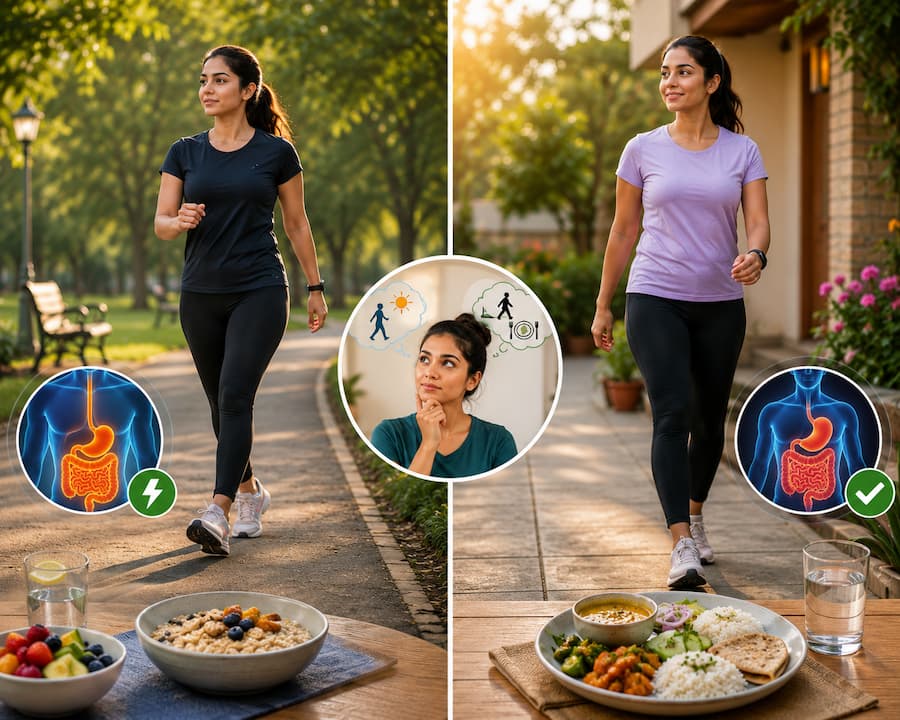
Walking has somehow become both underrated and overcomplicated at the same time.
On one side, it gets dismissed because it does not look intense enough to impress fitness culture. On the other, people now debate the “perfect” walking window with the seriousness of a Formula 1 pit strategy.
The reality is simpler.
Both walking before meals and walking after meals can offer benefits. The better option usually depends on what someone is trying to improve: digestion, blood sugar control, energy levels, appetite regulation, or simply finding a routine they can actually sustain beyond three motivational days and a newly purchased fitness band.
What Happens When You Walk Before Eating?
Walking before meals is often done in a fasted or semi-fasted state, especially in the morning.
Some people enjoy it because it feels mentally refreshing and helps them start the day with movement before work, traffic, notifications, and life begin competing for attention.
Walking before eating may help:
- Increase overall daily activity
- Improve mood and alertness
- Support calorie expenditure
- Create routine consistency
- Improve appetite awareness for some people
Morning walks, in particular, can feel calming because they happen before the brain enters full modern chaos mode.
That said, fasted walking is not magical fat-burning wizardry.
The body still responds primarily to overall energy balance and long-term consistency rather than one perfectly timed walk.
Does Fasted Walking Burn More Fat?
This topic gets exaggerated heavily online.
During fasted activity, the body may rely slightly more on stored fat for fuel in that moment.
But long-term fat loss still depends largely on:
- Total calorie intake
- Overall activity levels
- Sleep quality
- Nutrition habits
- Sustainability
A fasted walk does not automatically override poor lifestyle habits the rest of the day.
The human body remains frustratingly resistant to shortcut culture.
What Happens When You Walk After Eating?
Post-meal walking has gained attention because of its potential impact on digestion and blood sugar regulation.
Research suggests that light movement after meals may help muscles use circulating glucose more effectively.
This is one reason short walks after meals are often discussed in conversations around:
- Blood sugar management
- Energy stability
- Metabolic health
- Sedentary lifestyle reduction
Many people also notice they feel:
- Less sluggish
- Less bloated
- More mentally alert
after a gentle walk instead of immediately sitting or lying down.
Why Post-Meal Walks Often Feel Surprisingly Good
A lot of modern routines involve eating and then becoming instantly sedentary.
Lunch becomes:
- desk chair
- laptop
- emails
- another coffee
- minimal movement
The body was not exactly designed around spending ten hours folded into office furniture after every meal.
Even short walks may help break that cycle.
Some people find that walking after dinner also helps reduce late-night heaviness and improves their sense of routine consistency.
Is Walking Immediately After Eating Bad?
For most people, light walking after meals is generally well tolerated.
The keyword is light.
Very intense exercise immediately after large meals may feel uncomfortable because digestion is already demanding blood flow and energy.
Gentle walking, however, is usually manageable for many individuals.
The body tends to appreciate moderate movement more than sudden attempts to transform digestion into a competitive sporting event.
Which Is Better for Weight Loss?
There is no universally superior answer.
Walking itself contributes to calorie expenditure and daily movement regardless of timing.
That said, post-meal walks may indirectly support weight management by helping:
- Reduce prolonged sitting
- Improve blood sugar stability
- Increase overall daily activity
- Reduce feelings of sluggishness after eating
Morning or fasted walks may work well for people who struggle to stay active later in the day.
The best walking time is often the one people consistently maintain.
That answer is less exciting than biohacking culture prefers, but it is usually more useful.
Digestion, Blood Sugar, and Energy Levels
People respond differently to meal timing and activity.
Some individuals feel energized walking before breakfast. Others prefer walking after meals because it improves digestion and reduces heaviness.
Lifestyle matters too.
Someone with long office hours may benefit significantly from short post-lunch walks simply because they interrupt extended sedentary time.
Meanwhile, someone with an early-morning routine may naturally find pre-breakfast walks easier to maintain consistently.
The Bigger Issue Is Usually Inactivity
Many health problems associated with modern lifestyles are not caused by missing one perfectly timed walk.
They are often linked to:
- Chronic inactivity
- Poor sleep
- High stress
- Excess ultra-processed foods
- Long sitting hours
- Irregular movement patterns
Walking helps because it introduces regular movement into routines that are otherwise heavily sedentary.
That matters far more than obsessing over the exact minute after lunch when someone begins walking.
What Usually Works Best in Real Life
For many people, practical strategies look something like:
- Morning walks for consistency and mental clarity
- Short post-meal walks for digestion and blood sugar support
- Walking calls during work hours
- Evening walks to reduce sedentary time
None of this is extreme.
That is partly why it works.
HealthyHold Take
Walking before meals and walking after meals can both support health in different ways.
Pre-meal walks may help with routine consistency and overall activity, while post-meal walks may support digestion, blood sugar regulation, and reduced sedentary time.
The body generally benefits more from regular sustainable movement than from endlessly searching for the “perfect” walking schedule online.
Important Note
This article is intended for general health and wellness education only and should not be considered medical advice, diagnosis, or treatment. Individuals with diabetes, cardiovascular conditions, digestive disorders, or other medical concerns should consult a qualified healthcare professional for personalized guidance regarding exercise timing and activity levels.